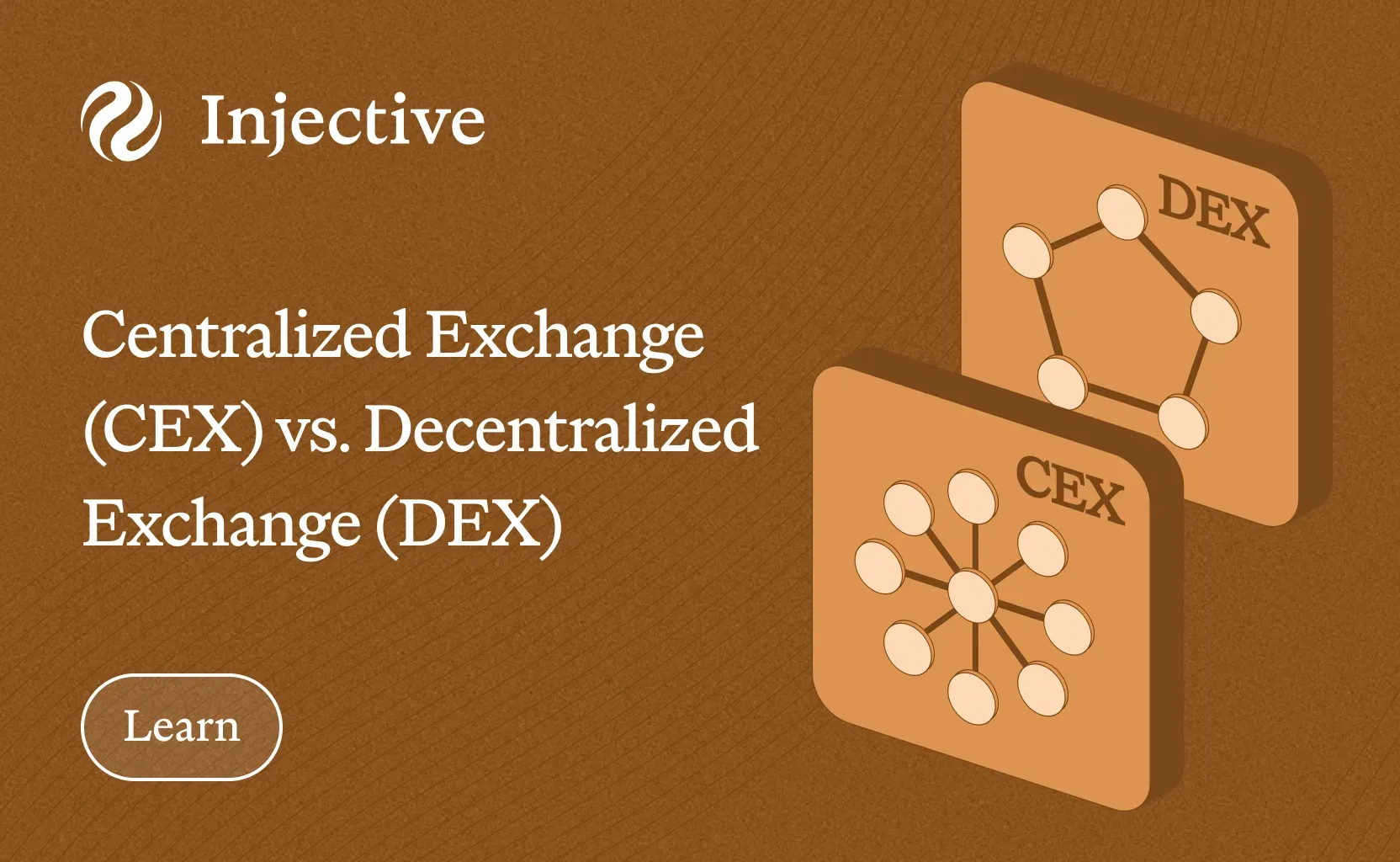
Centralized exchanges (CEXs) and decentralized exchanges (DEXs) represent two fundamentally different models for trading digital assets. Both enable users to buy, sell, and trade cryptocurrencies, but they differ significantly in custody, architecture, risk profile, and user experience.
Understanding the differences between a centralized exchange and a decentralized exchange is essential for anyone participating in crypto markets. Each model introduces distinct trade-offs related to security, control, liquidity, and regulatory exposure.
As crypto adoption expands, users increasingly interact with both CEXs and DEXs depending on their needs. Knowing when and why to use each helps traders and investors make informed decisions and manage risk effectively.
How Centralized Exchanges Work
A centralized exchange is operated by a single organization that manages the trading platform, order matching, custody of assets, and user accounts. Users deposit funds into wallets controlled by the exchange and trade within the platform’s internal systems.
CEXs typically use traditional order book models, where buy and sell orders are matched based on price and time priority. Because trades occur offchain within the exchange’s infrastructure, execution can be fast and highly liquid.
Step-by-step flow on a CEX
- Users create an account and complete any required verification
- Funds are deposited into exchange-controlled wallets
- Orders are placed through the exchange interface
- The exchange matches orders internally
- Balances are updated in user accounts
Because the exchange controls custody and execution, users must trust the platform to operate securely and honestly.
What users interact with
Users interact with web or mobile interfaces that abstract away blockchain complexity. This makes CEXs accessible to beginners but also limits transparency.
Key constraints of centralized exchanges
Centralized exchanges face constraints such as:
- Custodial risk
- Regulatory requirements
- Operational failures
- Potential withdrawal restrictions
How Decentralized Exchanges Work
A decentralized exchange enables users to trade directly from their own wallets without transferring custody to a central entity. Trades are executed through smart contracts deployed on a blockchain.
DEXs rely on onchain logic to handle order matching, settlement, and asset transfers. Because transactions occur onchain, users retain control of their assets throughout the trading process.
Step-by-step flow on a DEX
- Users connect a self-custodial wallet
- Orders or swaps are submitted to smart contracts
- Trades are executed according to protocol rules
- Settlement occurs onchain
- Assets remain under user control
DEX architectures
Decentralized exchanges can use different models, including automated market makers and onchain order books. Each design affects liquidity, execution quality, and user experience.
Key constraints of decentralized exchanges
DEXs face challenges such as:
- Network congestion
- Transaction fees
- Onchain execution latency
- Smart contract risk
Key Differences Between CEXs and DEXs
Custody and control
On a centralized exchange, users deposit assets into wallets controlled by the platform. This allows the exchange to manage order matching and settlement internally, but it also means users relinquish direct control over their funds.
On a decentralized exchange, users retain custody of their assets at all times. Trades are executed directly from self-custodial wallets, reducing custodial risk but increasing user responsibility.
Transparency and trust assumptions
Centralized exchanges operate largely through internal systems that are not publicly verifiable. Users must trust the exchange to accurately report balances, execute trades fairly, and safeguard funds.
Decentralized exchanges execute trades onchain. Transactions, balances, and settlement logic are transparent and verifiable by anyone, reducing reliance on trust.
Liquidity and execution quality
Centralized exchanges often offer deep liquidity and tight spreads due to professional market makers and internal matching engines.
DEX liquidity depends on protocol design, incentives, and network conditions. While some DEXs rival CEX liquidity, others may experience slippage during volatile periods.
User experience and accessibility
CEXs typically offer polished interfaces, customer support, and simplified onboarding. These features make them accessible to beginners but can obscure underlying risks.
DEXs require wallet management and onchain interactions, which introduce a learning curve but provide greater autonomy.
Permissioning and censorship resistance
Centralized exchanges may restrict access based on jurisdiction, compliance rules, or internal policies.
Decentralized exchanges are generally permissionless, allowing anyone with a compatible wallet to participate without approval.
Pros and Cons of Centralized Exchanges
Centralized exchanges offer several advantages.
Pros include deep liquidity, fast execution, fiat onramps, and beginner-friendly interfaces. Customer support and familiar trading tools can make CEXs easier to use for many participants.
However, centralized exchanges also introduce drawbacks. Users face custodial risk, potential withdrawal restrictions, regulatory exposure, and reliance on a single operator.
Understanding these trade-offs helps users decide when a centralized exchange is appropriate.
Pros and Cons of Decentralized Exchanges
Decentralized exchanges emphasize self-custody and transparency.
- Pros include: direct asset control, onchain settlement, censorship resistance, and composability with DeFi protocols. Users do not rely on a central intermediary to access markets.
- Cons include: smart contract risk, onchain fees, execution latency, and a steeper learning curve for new users.
Evaluating these pros and cons helps users select the exchange model aligned with their priorities.
Security Considerations
Security risks differ significantly between centralized and decentralized exchanges, largely due to differences in custody and architecture.
Centralized exchanges concentrate large amounts of user funds in custodial wallets. This makes them attractive targets for hacks, insider abuse, and operational failures. Exchange insolvency or withdrawal freezes can also prevent users from accessing funds.
Decentralized exchanges eliminate custodial risk by allowing users to retain control of assets. However, users are exposed to smart contract vulnerabilities, phishing attacks, and transaction-signing errors.
Security on DEXs depends heavily on user behavior and protocol design. Poor wallet hygiene or interaction with malicious contracts can result in irreversible losses.
Understanding these security models helps users choose the exchange type that aligns with their risk tolerance.
Regulatory Differences
Centralized exchanges operate under regulatory frameworks that vary by jurisdiction. These frameworks often require identity verification, transaction monitoring, reporting, and restrictions on certain assets or services.
Regulation can provide consumer protections but may also limit access or impose geographic restrictions.
Decentralized exchanges typically operate without a central operator, creating regulatory ambiguity. While this enables permissionless access, it also means users may lack formal legal recourse in the event of disputes or losses.
Regulatory uncertainty remains one of the key challenges facing decentralized exchange adoption.
Use Cases for CEXs
Centralized exchanges are often preferred for:
- Fiat onramps and offramps
- High-liquidity trading pairs
- Beginner-friendly interfaces
- Customer support access
Use Cases for DEXs
Decentralized exchanges are commonly used for a range of onchain activities.
They are often preferred for:
- Self-custodial trading without intermediaries
- Access to onchain-native assets and markets
- Integration with decentralized finance protocols
- Censorship-resistant trading during market disruptions
DEXs play a key role in the broader DeFi ecosystem by enabling composable financial applications.
CEX vs DEX for Different Users
Different users benefit from different exchange models.
Beginners may prefer centralized exchanges due to ease of use and familiarity.
Experienced users may prefer decentralized exchanges for greater control, transparency, and composability.
Many participants use both models depending on the situation.
Why CEX vs DEX Matters Today
The distinction between centralized and decentralized exchanges has become increasingly important as crypto markets mature.
High-profile exchange failures, regulatory actions, and the growth of decentralized finance have highlighted the risks of custodial concentration and opaque operations.
At the same time, the performance and liquidity advantages of centralized exchanges remain relevant for many users.
Understanding CEX vs DEX helps participants evaluate trade-offs between convenience, control, transparency, and risk in a rapidly evolving market.
CEX vs DEX Risk Management Strategies
Risk management differs significantly between centralized and decentralized exchanges.
On centralized exchanges, risk management often focuses on counterparty exposure, withdrawal policies, and platform solvency. Users must assess the credibility and operational practices of the exchange itself.
On decentralized exchanges, risk management shifts toward smart contract risk, wallet security, and transaction correctness. Users are responsible for safeguarding private keys and verifying interactions.
Effective risk management requires adjusting practices based on the exchange model being used.
Hybrid Exchange Models and the Future of Trading
Some modern platforms attempt to combine elements of centralized and decentralized exchanges.
Hybrid models may offer centralized order matching with decentralized settlement or self-custodial designs with high-performance infrastructure.
These approaches aim to deliver CEX-like performance while preserving the transparency and custody benefits of DEXs.
CEX and DEX in the Injective Ecosystem
Injective is designed to support decentralized exchange infrastructure through high-performance onchain order books.
By enabling fast execution and low fees, Injective aims to combine the performance benefits traditionally associated with CEXs with the transparency and self-custody of DEXs.
This design illustrates how modern blockchains attempt to bridge the gap between centralized and decentralized trading models.
How to Choose Between a CEX and a DEX
Choosing between a centralized exchange and a decentralized exchange depends on individual goals.
Considerations include:
- Desired level of custody and control
- Regulatory and geographic constraints
- Trading frequency and volume
- Risk tolerance
Evaluating these factors helps users select the appropriate platform.
FAQ
What is the main difference between a CEX and a DEX?
The main difference is custody. CEXs hold user funds, while DEXs allow users to retain custody.
Are decentralized exchanges safer than centralized exchanges?
DEXs reduce custodial risk but introduce smart contract and user error risks.
Can beginners use decentralized exchanges?
Yes, but beginners should understand wallet management and transaction mechanics first.
Do CEXs and DEXs have different fees?
Yes. Fee structures differ based on platform design, network fees, and liquidity incentives.
Will DEXs replace CEXs?
Both models are likely to coexist, serving different user needs.