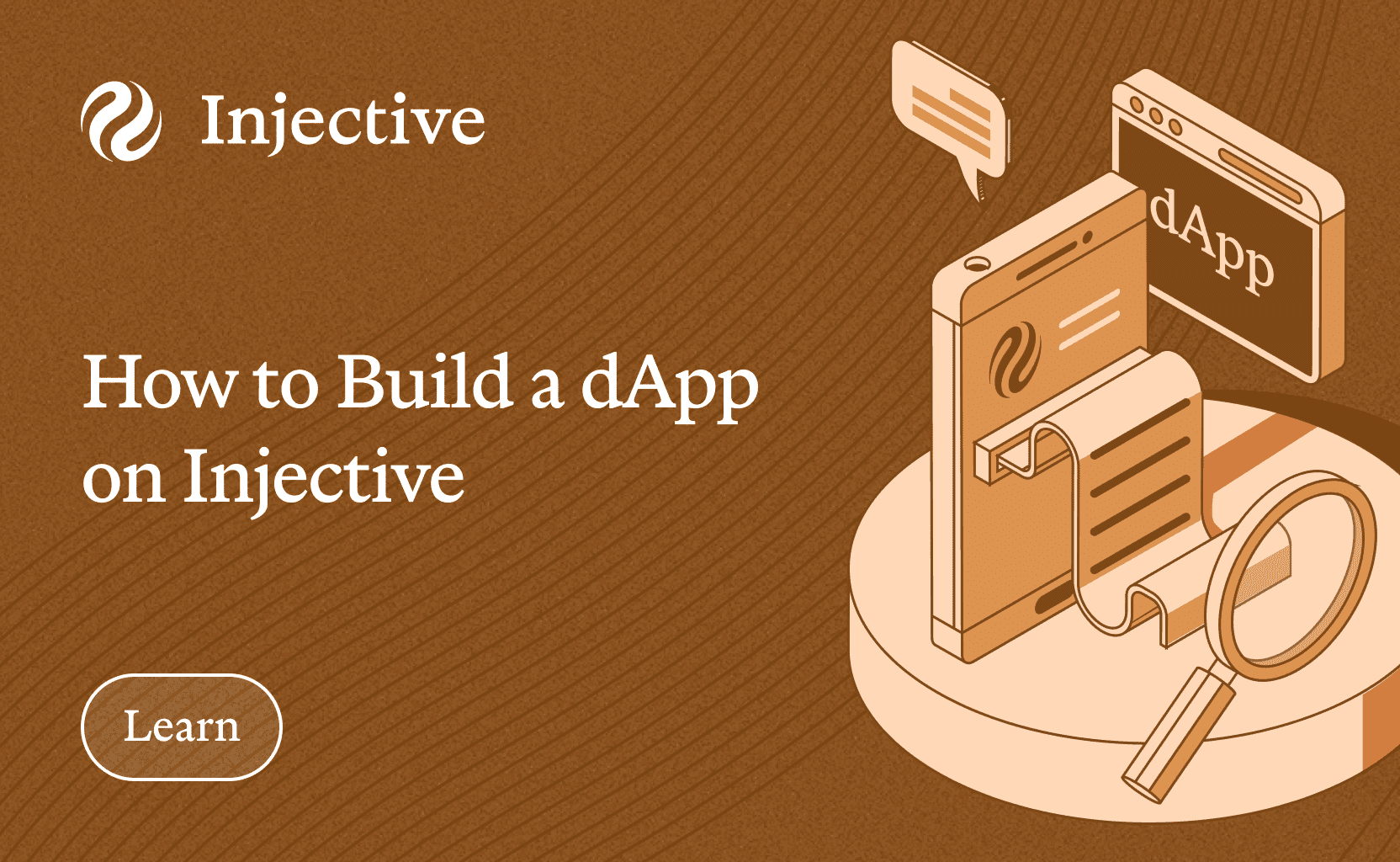
Launching a decentralized application requires careful planning across architecture, smart contract design, frontend integration, and long-term ecosystem strategy. The Injective blockchain provides a high-performance, finance-optimized environment for developers building decentralized applications that require fast execution, onchain order books, and advanced derivatives functionality.
Understanding how to launch a dApp on the Injective blockchain involves more than deploying smart contracts. It requires evaluating technical infrastructure, cross-chain compatibility, liquidity access, governance considerations, security posture, and post-launch growth strategy.
This guide provides a structured overview of the development lifecycle from concept to mainnet deployment.
Why Build on Injective?
Injective is purpose-built for decentralized finance and trading applications. Unlike general-purpose blockchains, Injective includes native modules optimized for financial primitives such as spot markets, perpetual futures, and order book–based trading.
The network combines high throughput with low latency, enabling applications that require responsive execution. Developers building exchanges, structured products, prediction markets, derivatives protocols, or advanced trading tools benefit from infrastructure designed specifically for financial use cases.
Injective also supports cross-chain interoperability, allowing assets and data to flow between ecosystems. This expands the design space for dApps that require liquidity or user access beyond a single chain.
Understanding Injective Architecture
To successfully launch a dApp on Injective blockchain infrastructure, developers should understand its architectural foundations.
Injective is built using a modular blockchain framework that enables custom modules for financial applications. Native modules include exchange functionality, derivatives markets, and staking logic.
The network achieves fast finality and deterministic execution, which is particularly important for trading and derivatives use cases.
This modular architecture allows developers to either deploy custom smart contracts or integrate directly with built-in financial primitives.
EVM Compatibility and Development Flexibility
Injective supports EVM-compatible development environments, enabling developers to use familiar tooling such as Solidity-based smart contracts.
This compatibility lowers the barrier to entry for teams migrating from Ethereum or other EVM ecosystems.
Developers can reuse libraries, testing frameworks, and deployment pipelines while benefiting from Injective’s performance characteristics.
At the same time, Injective’s native modules provide functionality that may reduce the need for fully custom contract logic, depending on the application’s goals.
Prerequisites for Launching a dApp
Before beginning development, teams should ensure they possess:
- Strong understanding of blockchain architecture and transaction flow
- Smart contract development experience
- Knowledge of frontend frameworks for Web3 integration
- Familiarity with wallet authentication and signing flows
- Understanding of financial risk models if building DeFi products
Launching a dApp on Injective blockchain infrastructure requires both engineering and product design capabilities.
Step 1: Define Your dApp Architecture
The first step is defining the application’s technical and economic architecture.
Developers must decide whether to:
- Build fully custom smart contracts
- Integrate with Injective’s native exchange or derivatives modules
- Combine custom logic with native infrastructure
Architecture decisions affect scalability, gas efficiency, security exposure, and user experience.
Financial applications must also define liquidation logic, margin parameters, fee structures, and oracle integrations if applicable.
Step 2: Design Smart Contracts and Core Logic
Smart contracts form the backbone of decentralized applications.
Developers should:
- Define state variables clearly
- Implement access controls and permission boundaries
- Avoid unnecessary complexity
- Optimize for gas efficiency
- Anticipate edge cases and failure modes
Well-structured contract design reduces the likelihood of vulnerabilities and simplifies auditing.
For applications integrating trading functionality, careful handling of order execution, collateral tracking, and settlement conditions is essential.
Step 3: Test Extensively on Testnet
Before deploying to mainnet, thorough testing is critical.
Testing should include:
- Unit testing of contract logic
- Integration testing with Injective modules
- Stress testing for edge cases
- Simulated high-volatility scenarios for financial products
Testnet deployment allows developers to validate contract behavior in a live-like environment without risking real capital.
Iterative testing cycles help refine both performance and security posture.
Step 4: Integrate Frontend and Wallet Infrastructure
A successful dApp requires seamless user interaction.
Frontend applications typically integrate wallet connections, transaction signing flows, and state updates reflecting onchain data.
Developers must ensure that transaction confirmations, pending states, and error handling are clearly communicated to users.
Performance optimization is particularly important for trading applications where latency affects user experience.
Clear UX design reduces user error and improves retention after launch.
Step 5: Integrate Liquidity and Market Access
For DeFi or trading dApps, liquidity access is critical.
Injective’s onchain order book infrastructure allows applications to tap into existing markets rather than bootstrap liquidity from scratch.
Developers may also design incentive mechanisms such as liquidity mining, staking rewards, or fee rebates to attract early participation.
Economic design must balance growth incentives with long-term sustainability.
Step 6: Conduct Security Audits
Security is one of the most important phases before launch.
Independent audits help identify vulnerabilities such as reentrancy risks, arithmetic errors, improper access controls, or oracle dependencies.
In addition to third-party audits, internal review and peer code analysis strengthen overall security posture.
For financial dApps, stress testing liquidation logic and extreme market conditions is particularly important.
Step 7: Deploy to Mainnet
After successful testing and auditing, contracts can be deployed to mainnet.
Deployment should follow a structured checklist:
- Confirm contract addresses
- Verify initialization parameters
- Validate fee structures
- Confirm oracle configuration
- Announce launch details clearly to users
Once live, ongoing monitoring becomes critical.
Governance and Validator Considerations
Injective blockchain governance mechanisms may influence certain protocol parameters.
Developers launching complex financial dApps should understand how governance decisions could affect network-level settings such as fees or module updates.
Validator participation and network health also impact application performance and reliability.
Monitoring governance proposals and ecosystem upgrades ensures long-term compatibility.
Cross-Chain Interoperability and Asset Support
Injective supports cross-chain asset flows, enabling dApps to access liquidity from multiple ecosystems.
Applications can integrate bridged assets or design multi-chain user experiences.
Cross-chain compatibility expands user reach but introduces additional security considerations around bridge mechanisms and asset custody.
Developers must carefully evaluate integration points when building cross-chain functionality.
Tokenomics and Incentive Design
Launching a dApp on Injective blockchain infrastructure often involves economic design decisions.
Developers may issue tokens for governance, fee discounts, staking rewards, or liquidity incentives.
Token supply, distribution schedules, and emission structures must align with long-term product goals.
Overly aggressive incentives can attract short-term users without creating sustainable adoption.
Careful modeling of incentives helps balance growth and resilience.
Monitoring, Analytics, and Post-Launch Iteration
Deployment is not the final step.
Successful dApps continuously monitor:
- Transaction volume
- Liquidity depth
- User growth metrics
- Smart contract events
- Security alerts
Data-driven iteration enables improvements to UI, fee structures, and incentive models.
Rapid response to bugs or vulnerabilities builds trust within the community.
Common Mistakes When Launching a dApp
Several recurring mistakes affect new projects.
Underestimating security risks is one of the most costly errors.
Launching without sufficient liquidity planning can reduce user confidence.
Ignoring user experience considerations can limit adoption even when backend architecture is strong.
Overcomplicating tokenomics may also introduce unnecessary friction.
Learning from previous launches within the Injective ecosystem can improve outcomes.
Launching Different Types of dApps on Injective
Different categories of decentralized applications have distinct architectural requirements. Understanding these differences helps teams design more efficient systems when they launch dApp Injective blockchain projects.
Decentralized Exchanges (DEXs)
Teams building spot or derivatives exchanges must integrate deeply with Injective’s onchain order book infrastructure.
Key considerations include:
- Order matching performance and latency sensitivity
- Fee model configuration (maker-taker dynamics)
- Liquidation engine design for leveraged products
- Market listing and liquidity bootstrapping strategy
Because Injective natively supports financial modules, DEX builders can leverage existing primitives rather than recreating core exchange logic from scratch.
Derivatives and Structured Products
Derivatives platforms require additional layers of risk management.
Developers must implement margin requirements, funding rate logic for perpetual futures, oracle integrations for price feeds, and liquidation safeguards.
Stress testing becomes especially important in high-volatility scenarios to ensure collateral systems remain solvent under extreme market moves.
Injective’s performance characteristics make it suitable for products requiring frequent position updates and precise settlement.
Prediction Markets and Binary Options Platforms
Event-based dApps such as prediction markets rely heavily on reliable oracle systems and clearly defined settlement conditions.
Design considerations include:
- Event resolution mechanisms
- Dispute handling logic
- Liquidity incentives for thin markets
Because these applications often experience heightened volatility near expiration, developers must anticipate rapid order flow and price convergence behavior.
Lending and Yield Platforms
Lending protocols require robust collateral management systems, liquidation engines, and interest rate models.
Architectural priorities include capital efficiency, oracle accuracy, and risk parameter calibration.
Integrating with Injective’s broader ecosystem may allow lending platforms to tap into existing liquidity pools and trading infrastructure.
NFT and Tokenization Applications
NFT platforms and asset tokenization projects may focus more heavily on user experience, metadata storage, and marketplace functionality.
Even in these cases, developers must consider wallet integration, transaction cost optimization, and interoperability with broader ecosystem assets.
Each category of dApp carries different performance, security, and liquidity demands. Aligning architecture with use case is one of the most important strategic decisions when launching on Injective.
Why Launching on Injective Matters Today
The Injective blockchain continues to expand its ecosystem of trading and financial applications.
Launching a dApp on Injective allows developers to leverage specialized financial infrastructure, onchain order books, and high-performance execution.
As decentralized finance evolves, infrastructure tailored for advanced financial use cases becomes increasingly valuable.
Developers who understand both technical architecture and economic design can build scalable applications that integrate seamlessly into decentralized trading ecosystems.
FAQ
Is Injective EVM compatible?
Yes. Injective supports EVM-compatible development environments, enabling developers to deploy Solidity-based smart contracts using familiar tools.
Do I need to audit my dApp before launch?
Audits are strongly recommended. Independent review reduces the likelihood of vulnerabilities and improves user trust.
Can I integrate directly with Injective’s order book?
Yes. Developers can integrate with Injective’s onchain exchange infrastructure, allowing applications to access existing liquidity.
How long does it take to launch a dApp?
Timeline depends on complexity, security requirements, and testing depth. Financial applications typically require extended audit and testing phases.
What skills are required to launch a dApp on Injective blockchain?
Developers need smart contract expertise, frontend Web3 integration experience, and understanding of financial mechanics if building DeFi products.