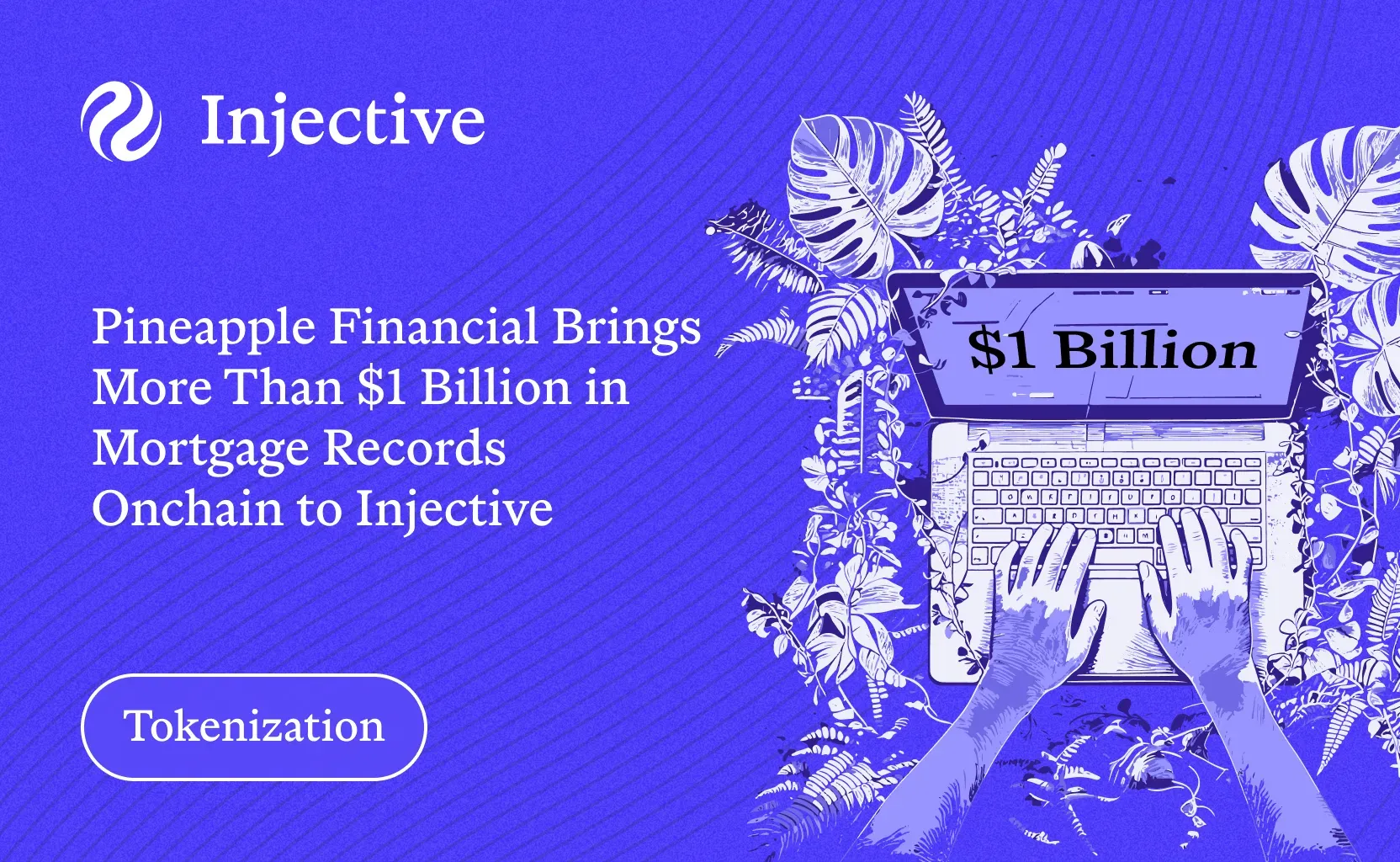
Injective is now one of the leading layer-1 blockchains by total value of tokenized assets onchain. Pineapple Financial has moved more than $1 billion in residential mortgage records onto Injective, turning a growing share of its historical loan book into digital records that can be inspected and verified onchain.
The company, listed on NYSE American as PAPL, is migrating funded residential mortgage records onto Injective. Each mortgage is represented by a metadata-rich onchain record tied to the underlying loan file, rather than repackaged as a new mortgage security.
Pineapple's stated goal is to migrate its entire historical portfolio over time: more than 29,000 funded mortgages which amount to more than $10 billion in value.
Mortgage markets move enormous amounts of debt, but the records behind them often remain fragmented across PDFs, email threads, and operational systems. Servicers, custodians, and counterparties may have to reconcile ownership and servicing information across separate databases, turning routine verification into a slow manual process.
Pineapple is changing the location and structure of the mortgage record itself.
What Is Being Tokenized
This is not a synthetic instrument designed to track a mortgage portfolio. Pineapple is converting records from a working mortgage loan book into standardized onchain data assets. The original mortgage remains within its legal and servicing framework, while the tokenized record provides an auditable digital counterpart that captures loan-level data, provenance, and update history.
That distinction matters because the practical value comes from giving authorized participants a consistent, verifiable record. Instead of maintaining separate copies and reconciling them later, the parties involved can inspect the same underlying information.
How It Works
Each tokenized record contains more than 500 data points, enough to make it useful for more than a timestamp or proof of existence. Structured loan-level data can support automated verification, real-time audit trails, more responsive risk analysis, and compliant sharing with institutions that need to inspect a portfolio.
The back-office workflow changes with it. A servicer or auditor can query a consistent record instead of assembling a picture from disconnected files, reducing the delays and duplication that make mortgage administration expensive.
Where Pineapple Fits in the Broader Stack
Pineapple's migration illustrates why tokenization is not simply an issuance exercise. An asset needs a clear identity, rules governing who can interact with it, and records that remain aligned as it moves or changes.
Injective Mint, now live in private alpha, brings creation and administration into a single interface. Institutions can define an asset, configure holder and jurisdictional restrictions, assign administrative roles, and manage issuance or redemption without writing a custom contract. A deeper look into Injective Mint can be viewed here.
Pineapple's mortgage program is a distinct deployment, but it reflects the same shift from a standalone token toward an operating onchain asset. For securities, the record layer also carries a regulated function. On August 19, Injective Institutional Services became registered with the U.S. Securities and Exchange Commission as a transfer agent, and the registration is effective. That affiliated capability can support official securities ownership and transfer records alongside onchain settlement. It does not make Pineapple's mortgage records, or every asset created through Mint, a security; it gives institutions that issue regulated products another piece of the operational and regulatory infrastructure they need.
The Traction So Far
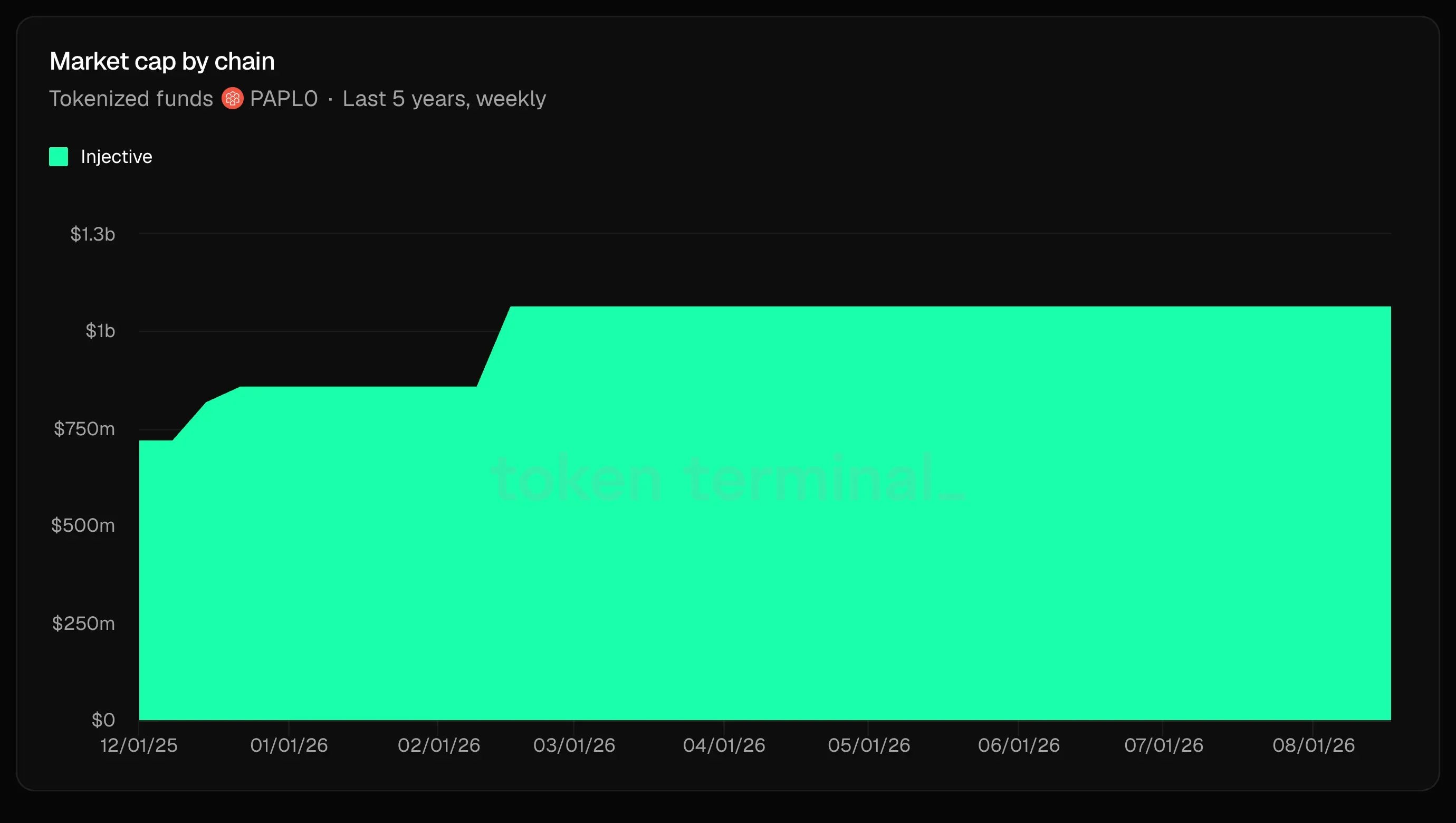
The migration is already measurable. Pineapple's dashboard reports 2,079 mortgage records onchain, compared with 1,259 at the December 2025 launch. Token Terminal lists PAPL0 at roughly $1.1 billion in asset market cap, an increase of about 48% over the past nine months.
That remains early against a target of more than 29,000 mortgages, but it is no longer just a proof of concept.
Pineapple is moving a live portfolio in public, one record at a time, with the progress available for anyone to follow.
Anchored by an INJ Treasury
The mortgage migration is one part of Pineapple's broader relationship with Injective. Separately, the company established a $100 million INJ Digital Asset Treasury, giving it balance-sheet exposure to the network alongside its operational use of the infrastructure.
Pineapple stakes INJ from the treasury, with Kraken serving as a primary validator. The treasury and the tokenization program are distinct initiatives, but together they show a company committing both operating data and capital to the same financial rails.
See It For Yourself
Pineapple's tokenized book is public and independently trackable. Follow the live mortgage dashboard and view PAPL0 on Token Terminal.

About Injective
Injective is the first blockchain purpose-built for finance, enabling users, institutions, and AI agents to trade, tokenize, and transact at scale. Proudly made in America, Injective provides foundational blockchain infrastructure for global markets, with embedded financial primitives spanning stablecoins, real-world assets, payments, and programmable perpetuals through a unified onchain engine. Injective is used by Fortune 500 companies, banks, fintechs, and governments to power an open economy where any asset can be accessed anytime, from anywhere. Builders can deploy across multiple virtual machines like WASM and EVM, connect to native financial modules, and launch markets with deep liquidity from day one. INJ is the native token powering the rapidly growing Injective ecosystem and the new internet economy.
Website | Telegram | Discord | Blog | Twitter | Youtube | Facebook | LinkedIn | Reddit | Instagram | Orbit Newsletter