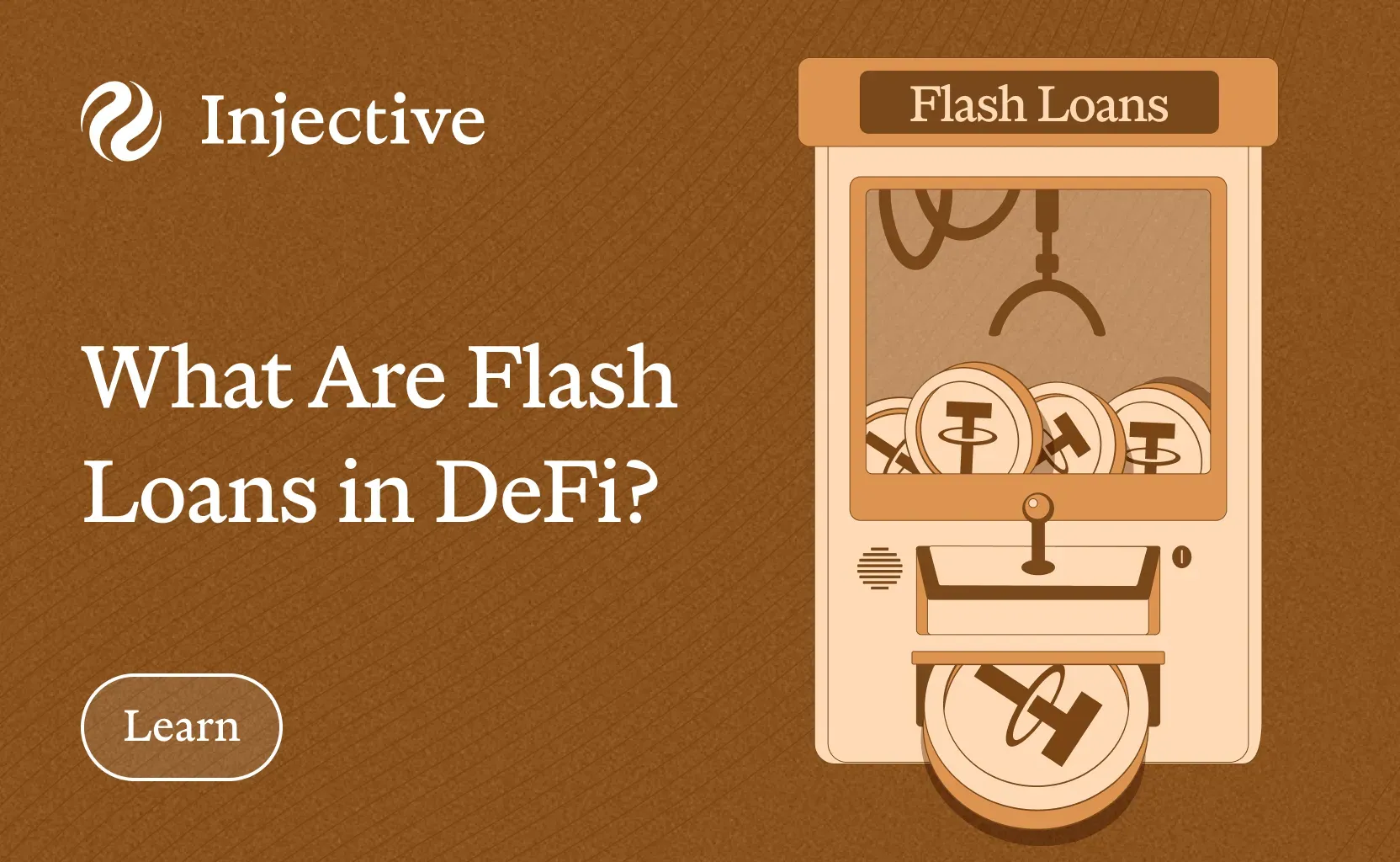
Flash loans are one of the most unique innovations introduced by decentralized finance. Unlike traditional loans, flash loans in DeFi allow users to borrow large amounts of capital instantly without posting collateral, provided the borrowed funds are returned within the same blockchain transaction.
This design makes flash loans powerful financial tools for arbitrage, refinancing, collateral swaps, liquidation participation, and advanced trading strategies. At the same time, they have been associated with high-profile exploits when protocols lack proper safeguards. Understanding flash loans DeFi mechanics helps clarify both their potential and their risks within modern crypto markets.
What Are Flash Loans in DeFi?
Flash loans are uncollateralized loans that must be borrowed and repaid within a single blockchain transaction.
If the borrower fails to repay the loan plus any required fees before the transaction completes, the entire transaction is automatically reversed. This atomic structure ensures that lenders face virtually no default risk because either the full repayment occurs instantly or the transaction never settles.
Unlike traditional finance, where lenders evaluate creditworthiness, require collateral, and assume time-based repayment risk, flash loans rely entirely on smart contract logic and blockchain execution guarantees.
How Flash Loans Work
Flash loans operate through smart contracts that enforce repayment conditions programmatically.
A borrower initiates a transaction by calling a flash loan function on a DeFi protocol. The protocol temporarily transfers funds from its liquidity pool to the borrower’s contract. The borrower can then execute arbitrary onchain logic using those funds.
Before the transaction ends, the borrower must return the original principal plus a protocol fee. If repayment conditions are not satisfied, the blockchain reverts the entire transaction state. This means balances return to their original values as though the loan never occurred.
This atomic execution model is what makes flash loans DeFi-native and distinct from traditional lending systems.
Step-by-Step: A Flash Loan Transaction
A typical flash loan follows this sequence:
- A user or smart contract calls a flash loan function.
- The protocol sends the requested funds to the borrower’s contract.
- The borrower executes a series of onchain operations such as trades, swaps, or liquidations.
- The borrower returns the original amount plus fees to the lending pool.
- The transaction finalizes. If repayment fails at any step, the entire transaction reverts.
Because all steps occur within a single block confirmation cycle, there is no settlement risk over time.
Why Flash Loans Do Not Require Collateral
Flash loans eliminate credit risk by eliminating time risk.
In conventional loans, lenders require collateral because borrowers have time between borrowing and repayment. During that period, borrowers may default. Flash loans compress borrowing and repayment into a single atomic transaction.
The protocol either receives repayment instantly or the transaction fails. Since there is no temporal gap, there is no opportunity for default in the traditional sense.
This structure allows uncollateralized borrowing while maintaining lender security.
Flash Loans vs Traditional Loans
Comparing flash loans to traditional lending clarifies their novelty.
Traditional loans involve identity checks, underwriting, collateral requirements, and repayment schedules. They are designed for long-term financing.
Flash loans are purely transactional tools. They are not intended for consumption or long-term borrowing but for executing complex onchain operations within a single transaction.
Where traditional loans distribute capital across time, flash loans concentrate capital within a single computational event.
Key Properties of Flash Loans
Flash loans share several defining characteristics.
Atomicity ensures that transactions either fully succeed or fully fail, preventing partial outcomes.
Capital efficiency allows users to access large sums of liquidity without upfront collateral.
Composability enables integration across multiple DeFi protocols in one transaction, chaining together swaps, trades, and contract calls.
Permissionless access means anyone with technical capability can attempt to execute a flash loan strategy.
These properties make flash loans powerful tools but also demand careful protocol design.
Common Use Cases of Flash Loans in DeFi
Flash loans are primarily used for advanced financial strategies rather than everyday borrowing.
Arbitrage
Arbitrage is the most common use case for flash loans DeFi applications.
For example, if Token A trades for 100 dollars on Exchange X and 105 dollars on Exchange Y, a trader can borrow capital via a flash loan, purchase Token A on Exchange X, sell it on Exchange Y, repay the loan, and retain the price difference minus fees.
Because no upfront capital is required, arbitrage becomes accessible to users who can identify profitable opportunities and execute transactions efficiently.
Collateral Swaps
Borrowers with existing positions can use flash loans to replace one type of collateral with another without closing their overall debt position.
This improves capital efficiency and reduces the need for manual multi-step transactions.
Liquidation Participation
Many lending protocols reward users who liquidate undercollateralized positions.
Flash loans allow participants to borrow capital, repay a portion of a distressed loan, claim the liquidation bonus, and repay the flash loan within the same transaction.
Debt Refinancing and Migration
Users can migrate positions between protocols by borrowing funds, repaying an existing loan, withdrawing collateral, redeploying it elsewhere, and repaying the flash loan in a single atomic operation.
Flash Loans in Derivatives and Complex Strategies
Flash loans are not limited to spot trading. They can also support derivatives strategies.
Traders may use flash loans to adjust margin positions, rebalance exposure across perpetual futures markets, or hedge short-term volatility.
Because derivatives markets often involve leverage, the ability to access temporary liquidity can facilitate sophisticated capital reallocation strategies.
Risks and Exploits Associated With Flash Loans
Flash loans themselves are neutral tools, but they can amplify vulnerabilities in poorly designed protocols.
Many DeFi exploits have used flash loans to temporarily manipulate prices, exploit oracle weaknesses, or drain liquidity pools.
A typical exploit sequence involves borrowing funds, manipulating a price feed or liquidity pool, triggering a vulnerability, extracting value, and repaying the loan before the transaction completes.
In these cases, the vulnerability lies not in the flash loan mechanism but in inadequate safeguards within the targeted protocol.
Common Attack Patterns
Several recurring patterns appear in flash loan–assisted exploits.
Price manipulation attacks rely on thin liquidity pools to distort asset prices temporarily.
Oracle manipulation attacks exploit protocols that depend on a single exchange price feed.
Reentrancy and logic flaws in smart contracts can also be amplified when large capital amounts are introduced instantly via flash loans.
Protocols that lack time-weighted average pricing, liquidity depth requirements, or robust validation logic are especially vulnerable.
Flash Loans and Oracles
Price oracles provide data to DeFi protocols for lending, derivatives settlement, and collateral valuation.
If oracle systems rely on manipulable liquidity pools, flash loans can temporarily skew price feeds and trigger unintended liquidations or minting events.
To mitigate these risks, many protocols use aggregated data sources, time-weighted averages, and delay mechanisms to reduce sensitivity to momentary distortions.
Strong oracle design is essential for limiting flash loan–related vulnerabilities.
Flash Loans on Injective
Within the Injective ecosystem, flash loan functionality can integrate into advanced trading and liquidity strategies.
Injective’s high-performance infrastructure and onchain order book design support complex transaction execution and composable interactions.
By enabling fast settlement and transparent market data, Injective provides an environment where atomic capital strategies can be executed efficiently.
Flash loans can complement derivatives trading, arbitrage, and liquidity provisioning strategies in such environments when used responsibly.
Why Flash Loans Matter Today
Flash loans continue to matter because they illustrate the composability and programmability of decentralized finance.
They demonstrate how capital can be deployed efficiently without intermediaries and how smart contracts can enforce repayment logic automatically.
At the same time, they serve as stress tests for protocol security. Each exploit has prompted improvements in oracle design, liquidity safeguards, and contract auditing standards.
As DeFi matures, flash loans remain both a powerful financial primitive and a reminder of the importance of robust risk management.
How to Get Started With Flash Loans
Flash loans are advanced tools intended primarily for developers and technically proficient traders.
A strong understanding of smart contract development, blockchain transaction flow, and DeFi protocol architecture is essential before attempting to build flash loan strategies.
Testing strategies on testnets, auditing code, and understanding gas costs are critical steps in responsible experimentation.
Users should also recognize that profitable flash loan opportunities are highly competitive and often captured by automated bots.
FAQ
What are flash loans in DeFi in simple terms?
Flash loans are uncollateralized loans that must be borrowed and repaid within a single blockchain transaction. If the borrower fails to repay instantly, the transaction reverses automatically.
Why do flash loans not require collateral?
They do not require collateral because the protocol eliminates time-based default risk. Repayment occurs within the same transaction or the loan never settles.
Are flash loans risky?
At the protocol level, flash loans are designed to be secure. However, they can be used in high-risk trading strategies and have been involved in exploits when other protocols lacked sufficient safeguards.
Who typically uses flash loans?
Flash loans are primarily used by developers, arbitrage traders, liquidation participants, and advanced DeFi strategists with technical expertise.
Are flash loans legal?
Flash loans themselves are simply smart contract mechanisms. Their legality depends on jurisdiction and the activities performed using them, just as with other financial tools.