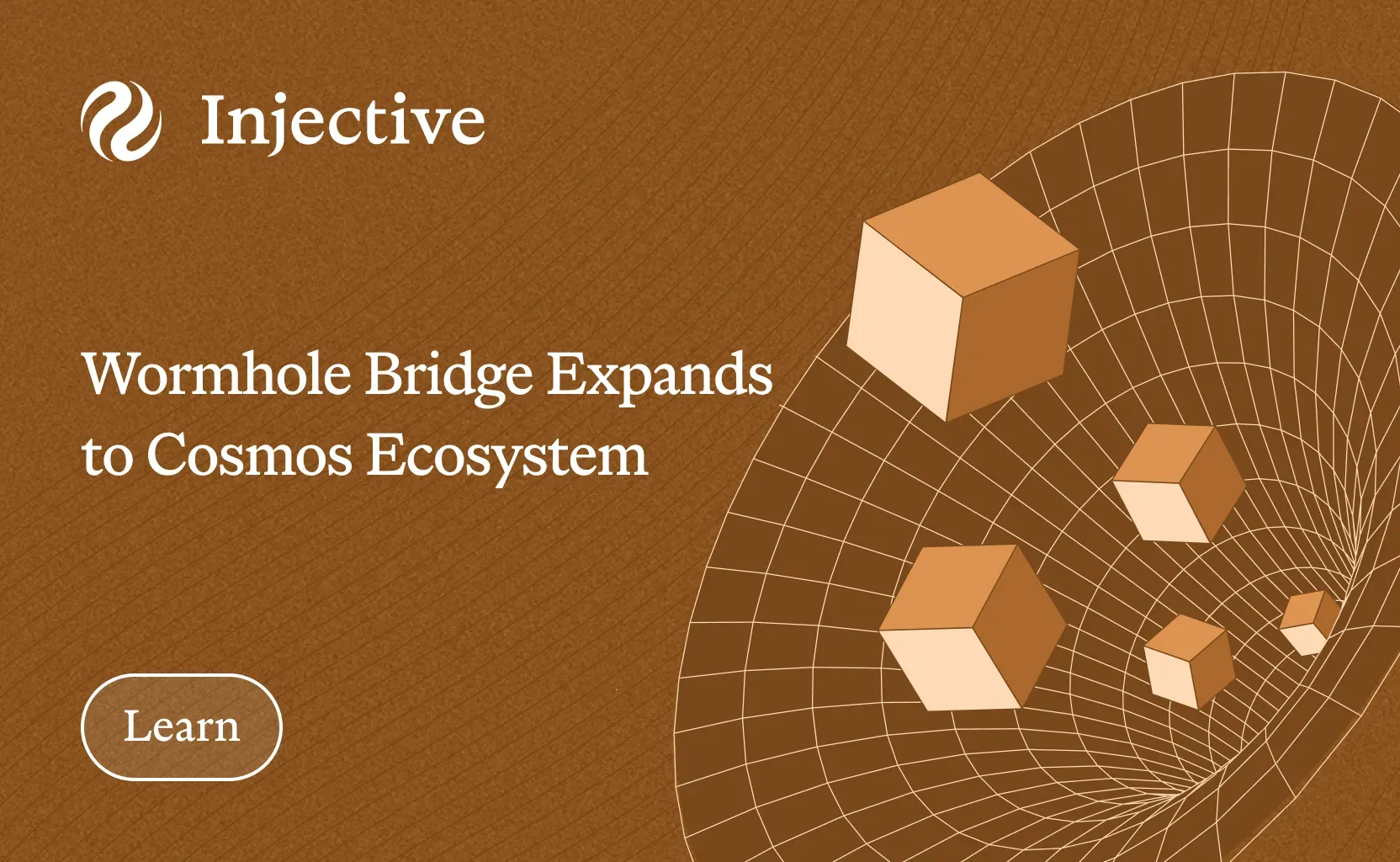
The Wormhole bridge is a cross-chain interoperability protocol designed to connect multiple blockchain ecosystems through secure message passing and asset transfers. Its expansion into the Cosmos ecosystem, including Injective, enables users and developers to move assets and data across previously siloed networks with greater efficiency.
Understanding the Wormhole bridge on Injective is essential for evaluating cross-chain liquidity access, interoperability architecture, developer opportunities, and the security trade-offs inherent in bridging systems.
As decentralized finance becomes increasingly multi-chain, interoperability infrastructure like Wormhole plays a central role in expanding capital efficiency, composability, and global liquidity coordination.
Why Cross-Chain Interoperability Matters
Blockchains were originally built as isolated systems. While this independence enhances sovereignty and security, it also fragments liquidity and limits composability across ecosystems.
Without interoperability, assets native to one blockchain cannot easily interact with applications on another. Users must rely on centralized exchanges or complex manual processes to move capital.
Cross-chain bridges address this limitation by enabling communication and asset transfers between independent networks.
In the context of Wormhole bridge Injective Cosmos integration, this means assets from Ethereum, Solana, and other supported chains can interact with applications deployed within the Injective environment.
Interoperability reduces capital friction, improves liquidity distribution, and enhances user optionality across decentralized systems.
What Is Wormhole?
Wormhole is a generic cross-chain messaging protocol.
Rather than simply transferring tokens, Wormhole enables arbitrary data messages to be transmitted between supported blockchains. These messages can trigger smart contract logic, mint wrapped assets, synchronize governance actions, or enable cross-chain DeFi strategies.
The protocol relies on a distributed validator system known as Guardians. These entities observe events on one blockchain, verify them, and collectively attest to their validity on a destination chain.
This design allows Wormhole to function as a generalized interoperability layer rather than a single-purpose asset bridge.
How Wormhole Bridge Works: Lock-and-Mint Model
Most Wormhole asset transfers follow a lock-and-mint model.
Step 1: A user initiates a transfer on the source chain. The asset is locked in a smart contract on the originating blockchain.
Step 2: Guardians observe and verify the transaction. They sign a cryptographic message confirming that the asset has been locked.
Step 3: The signed message is submitted to the destination chain.
Step 4: A corresponding wrapped asset is minted on the destination chain, representing the original asset.
If the user later transfers the asset back, the wrapped token is burned and the original locked asset is released.
This mechanism preserves total supply consistency across chains while enabling cross-ecosystem functionality.
Alternative Bridge Designs and Trade-Offs
Not all bridges use the same architecture. Common models include:
- Lock-and-mint (used by Wormhole)
- Burn-and-release
- Liquidity pool-based bridges
- Light-client verification bridges
Each model carries different security assumptions.
Lock-and-mint bridges rely on validator attestation. Liquidity pool bridges rely on pooled capital and pricing mechanisms. Light-client bridges verify consensus directly but may require more complex infrastructure.
Understanding these models helps contextualize Wormhole bridge Injective Cosmos within the broader interoperability landscape.
Guardian Network and Security Model
Wormhole’s Guardian network plays a critical role in maintaining cross-chain integrity.
Guardians monitor supported blockchains for valid transactions and sign messages attesting to those events. A quorum of signatures is required for a message to be accepted on the destination chain.
Security depends on:
- Guardian decentralization
- Honest majority assumptions
- Secure key management
- Robust smart contract implementation
If a sufficient number of Guardians were compromised, malicious messages could theoretically be approved. Therefore, operational security and decentralization are central to Wormhole’s resilience.
Cross-Chain Message Verification: Technical Flow
To better understand the Wormhole bridge on Injective, it is helpful to examine how message verification works at a deeper level.
When a user locks assets on the source chain, that event emits a transaction log. Guardians continuously monitor supported blockchains for these specific contract events.
Once detected, each Guardian independently verifies:
- The transaction’s inclusion in a valid block
- The block’s finality according to the source chain’s consensus rules
- The correctness of contract parameters
After validation, each Guardian signs a cryptographic message containing structured data such as:
- Source chain identifier
- Destination chain identifier
- Token contract address
- Transfer amount
- Recipient address
- Unique nonce
These signed attestations are aggregated into what is commonly referred to as a Verified Action Approval (VAA).
A threshold number of Guardian signatures must be present for the VAA to be considered valid. This threshold model reduces reliance on any single validator and distributes trust across the network.
When the VAA is submitted to the Injective blockchain, a smart contract verifies:
- Signature authenticity
- Signature quorum threshold
- Message uniqueness (to prevent replay attacks)
- Correct formatting and chain identifiers
Replay protection is particularly important. Each cross-chain message includes a unique nonce and sequence number. If a message has already been processed, the contract rejects duplicate submissions.
Only after all checks pass does the destination contract mint the corresponding wrapped asset.
This layered verification process combines offchain Guardian monitoring with onchain smart contract enforcement.
Historical Bridge Exploits and Lessons Learned
Cross-chain bridges have historically been among the largest targets in decentralized finance due to the large amounts of locked capital they manage.
Past bridge exploits across the industry have involved:
- Compromised validator keys
- Smart contract logic flaws
- Improper signature verification
- Inadequate consensus thresholds
These incidents highlight the importance of rigorous auditing, distributed validation, and continuous monitoring.
While no infrastructure can eliminate risk entirely, transparent design and layered security significantly improve reliability.
Users evaluating Wormhole bridge Injective Cosmos integration should understand both the opportunities and systemic risks associated with cross-chain capital movement.
Wormhole Expansion Into the Cosmos Ecosystem
Cosmos is known for its Inter-Blockchain Communication protocol (IBC), which enables native communication between Cosmos-based chains.
Injective already supports IBC connectivity. Wormhole integration extends interoperability beyond Cosmos-native chains to external ecosystems such as Ethereum and Solana.
This creates a hybrid interoperability framework:
- IBC for Cosmos-native communication
- Wormhole for external ecosystem connectivity
This dual-layer connectivity significantly broadens Injective’s reach.
Benefits of Wormhole on Injective
The integration of Wormhole bridge Injective Cosmos connectivity provides several advantages.
Expanded Liquidity Access
Assets from major ecosystems can flow into Injective-based DeFi protocols, increasing capital availability and trading volume.
Broader Developer Reach
Developers can design cross-chain dApps that interact with liquidity and users across multiple blockchains.
Enhanced Capital Efficiency
Users can deploy assets where opportunities are strongest rather than keeping funds siloed.
Multi-Chain Strategy Support
Traders can implement arbitrage, hedging, and yield strategies across chains.
Liquidity and Market Structure Implications
The arrival of bridged assets into Injective can deepen order books and expand derivatives markets.
More liquidity generally leads to tighter spreads and improved price discovery.
However, rapid cross-chain inflows and outflows may introduce volatility if large positions move quickly between ecosystems.
Protocol designers must monitor liquidity concentration and systemic risk exposure.
Developer Use Cases Enabled by Wormhole
Wormhole bridge Injective Cosmos integration enables sophisticated application design.
Developers can build:
- Cross-chain lending protocols
- Multi-chain derivatives platforms
- Cross-chain governance tools
- Asset routing aggregators
- Composable DeFi protocols spanning multiple chains
Cross-chain messaging allows contracts on one chain to trigger logic on another, expanding architectural flexibility.
User Best Practices When Bridging Assets
Bridging assets requires caution.
Users should:
- Verify destination addresses carefully
- Confirm network compatibility
- Use small test transactions first
- Monitor transaction confirmations
- Diversify holdings rather than concentrating all funds in wrapped assets
Bridge usage should align with individual risk tolerance and capital allocation strategy.
Governance and Ecosystem Coordination
Interoperability protocols must coordinate with host ecosystems.
Upgrades, parameter changes, or security patches may require governance proposals or validator coordination.
Developers building on Injective should remain aware of Wormhole updates that may affect cross-chain functionality.
Active ecosystem communication strengthens long-term reliability.
The Future of Multi-Chain Infrastructure
As blockchain ecosystems evolve, interoperability is becoming foundational rather than optional.
Future improvements may include:
- Greater validator decentralization
- Enhanced cryptographic verification
- Reduced bridging latency
- Improved capital efficiency mechanisms
Wormhole bridge Injective Cosmos integration represents one step in a broader shift toward interconnected blockchain networks.
Economic Risk Modeling for Bridged Liquidity
Beyond technical verification, cross-chain bridges introduce economic risk considerations that extend into market structure.
When assets are bridged into Injective from external ecosystems, they often represent wrapped claims on collateral locked elsewhere. If confidence in the bridge mechanism declines, wrapped assets may trade at a discount to their underlying value.
This de-pegging risk can propagate through DeFi systems in several ways:
- Collateral valuation shock if wrapped assets are widely used as margin
- Liquidity withdrawal from order books
- Forced deleveraging in derivatives markets
- Cross-chain contagion if redemptions accelerate
For example, if a large quantity of bridged ETH is used as collateral in lending or derivatives protocols on Injective, and a security incident affects the bridge, traders may rush to exit positions. This can create rapid liquidity contraction and amplified volatility.
Protocol designers can mitigate systemic exposure by:
- Applying conservative collateral factors to bridged assets
- Monitoring concentration risk
- Diversifying supported bridge providers
- Implementing circuit breakers during abnormal market stress
Users should also consider allocation discipline. Diversifying across native and bridged assets reduces exposure to a single interoperability pathway.
Modeling economic risk is therefore as important as evaluating technical architecture. Wormhole bridge Injective Cosmos integration expands opportunity, but responsible capital deployment requires awareness of both structural and systemic considerations.
Why Wormhole Matters Today
In a multi-chain environment, liquidity and users are distributed across ecosystems.
Wormhole strengthens Injective’s connectivity to external chains, enabling broader participation and innovation.
For developers, this integration expands design possibilities. For users, it unlocks cross-chain capital mobility.
Interoperability infrastructure is likely to remain a defining feature of decentralized finance’s continued expansion.
FAQ
Is Wormhole fully decentralized?
Wormhole relies on a distributed Guardian network rather than a single operator. Users should understand the associated trust assumptions.
How does Wormhole differ from IBC?
IBC is native to Cosmos chains and uses light-client verification. Wormhole connects Cosmos-based chains like Injective to external ecosystems.
Are wrapped assets safe?
Wrapped assets depend on bridge security. Users should evaluate risk and avoid excessive concentration.
Can developers build custom cross-chain logic using Wormhole?
Yes. Wormhole supports arbitrary message passing for advanced application design.
Why is interoperability important for Injective?
Interoperability expands liquidity, enhances composability, and strengthens Injective’s position within a multi-chain ecosystem.