As blockchain adoption has grown, scalability has emerged as one of the most significant challenges facing decentralized networks. Layer-2 solutions are designed to address these limitations by enabling blockchains to process more transactions efficiently without compromising decentralization or security.
Understanding layer-2 blockchain scaling is essential for evaluating how modern crypto networks support growing user demand, decentralized applications, and complex financial activity.
What Is Layer-2?
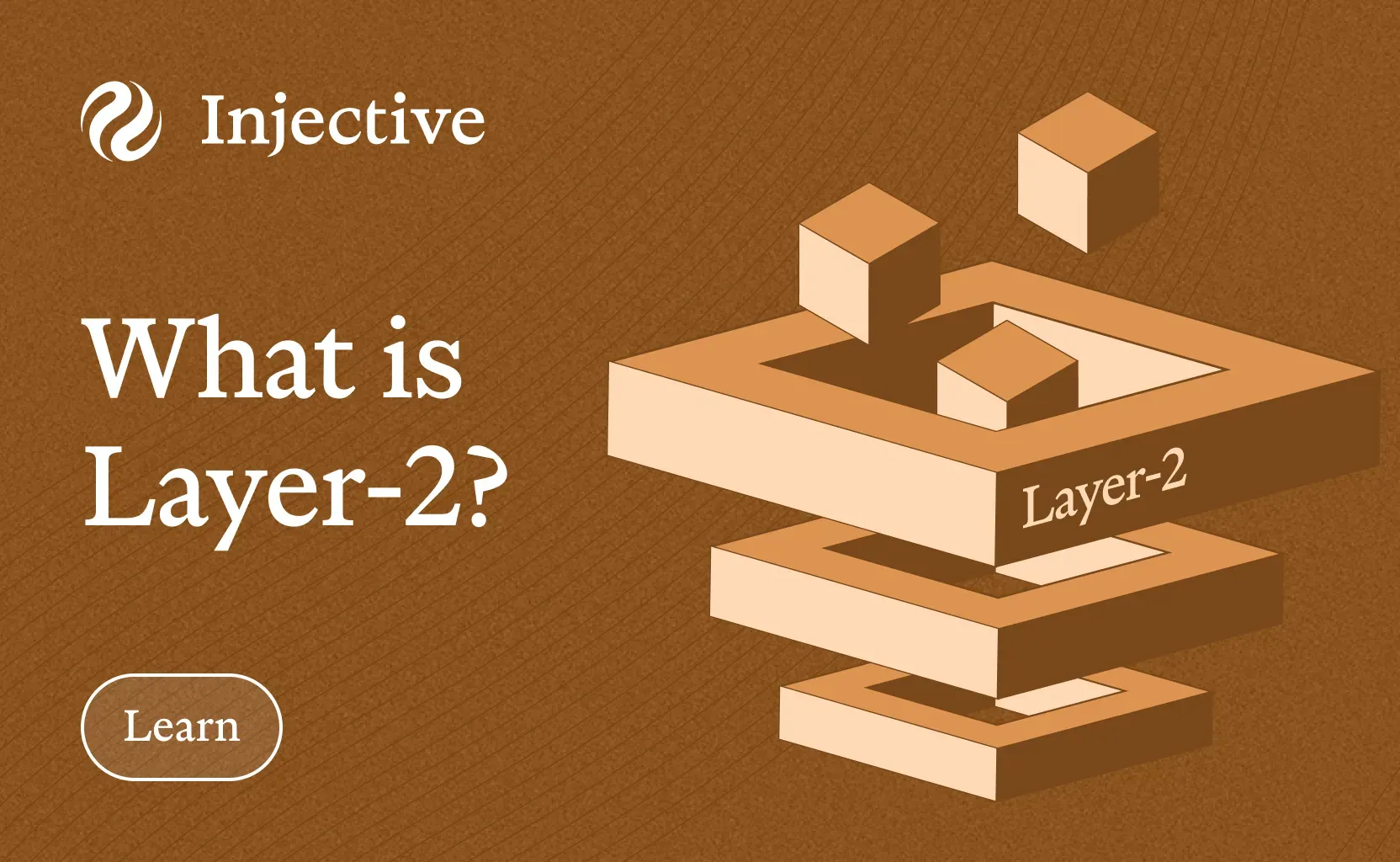
Layer-2 refers to a category of blockchain scaling solutions built on top of existing layer-1 blockchains. These systems process transactions outside the base layer while ultimately relying on the underlying blockchain for security and final settlement.
By moving transaction execution, computation, or state changes away from the base chain, layer-2 solutions significantly reduce congestion and transaction fees. This allows blockchains to support higher throughput without sacrificing decentralization.
Layer-2 solutions do not replace layer-1 blockchains. Instead, they extend the functionality of base layers by offloading work while preserving the security guarantees of the main chain.
Why Blockchain Scalability Matters
Blockchain scalability refers to a network’s ability to process transactions efficiently as usage grows.
Most layer-1 blockchains have limited block space. As demand increases, transactions compete for inclusion, leading to higher fees and slower confirmation times.
This creates friction for users and limits the practicality of decentralized applications. Without scalable infrastructure, blockchains struggle to support mass adoption.
Layer-2 solutions address these limitations by enabling higher throughput while preserving security and decentralization.
How Layer-2 Solutions Work
Layer-2 systems process transactions offchain or in parallel to the main blockchain.
Rather than recording every transaction directly on the base layer, layer-2 networks aggregate activity and periodically submit transaction data or cryptographic proofs back to layer-1.
This approach reduces the computational and storage burden on the base chain while maintaining security through settlement and verification on layer-1.
Different layer-2 designs vary in how transactions are validated, aggregated, and finalized.
Common Types of Layer-2 Solutions
Several architectural approaches fall under the layer-2 category, each with different trade-offs.
Rollups
Rollups bundle large numbers of transactions together and submit compressed data or proofs to the base layer.
Optimistic rollups assume transactions are valid by default and rely on fraud proofs to resolve disputes. Zero-knowledge rollups use cryptographic validity proofs to guarantee correctness.
State Channels
State channels allow participants to transact offchain while keeping only the final state recorded onchain. This approach is well suited for repeated interactions between known parties.
Sidechains
Sidechains operate as independent blockchains connected to a main chain through bridges. While often grouped with layer-2 solutions, sidechains introduce different security assumptions.
Benefits of Layer-2 Scaling
Layer-2 solutions offer several advantages over relying solely on base-layer scaling.
They significantly reduce transaction fees by minimizing onchain computation. They also increase throughput, enabling blockchains to support more users and applications simultaneously.
Improved scalability enhances user experience by reducing latency and making decentralized applications more responsive.
These benefits are critical for enabling complex financial applications, gaming, and social platforms.
Risks and Trade-Offs
While layer-2 solutions improve scalability, they introduce new trade-offs that users and developers must understand.
One major consideration is bridge security. Assets moved between layer-1 and layer-2 rely on bridges, which have historically been attractive attack targets. A compromised bridge can lead to significant losses even if the underlying blockchain remains secure.
Data availability is another concern. Some layer-2 systems post all transaction data on the base layer, while others rely on offchain data availability solutions. If transaction data becomes unavailable, users may be unable to verify state or exit safely.
Centralization risk can also emerge. Many layer-2 networks initially rely on centralized sequencers or operators to order transactions. While this can improve performance, it introduces trust assumptions that differ from fully decentralized blockchains.
Understanding these trade-offs is critical when evaluating the safety and maturity of layer-2 systems.
Layer-2 and DeFi
Layer-2 solutions play a foundational role in scaling decentralized finance applications.
Lower transaction fees enable more frequent trading, portfolio rebalancing, and arbitrage activity. Faster execution improves price discovery and reduces slippage for users.
Layer-2 networks also allow DeFi protocols to experiment with more complex logic that would be prohibitively expensive on congested base layers.
However, DeFi composability can become fragmented across multiple layer-2 networks, creating challenges for liquidity and interoperability.
Layer-1 vs Layer-2: Key Differences
Layer-1 blockchains handle consensus, security, and final settlement. They prioritize decentralization and security but face scalability limits.
Layer-2 solutions focus on execution and throughput. They extend layer-1 capacity without altering base-layer consensus.
Understanding this division clarifies why both layers are necessary.
Blockchain Scalability Trilemma
The blockchain scalability trilemma describes the difficulty of simultaneously achieving decentralization, security, and scalability.
Layer-1 blockchains typically prioritize decentralization and security, which limits throughput. Increasing block size or reducing validation requirements can improve scalability but may compromise decentralization.
Layer-2 solutions address this tension by moving execution off the base layer while inheriting security from layer-1. This allows systems to scale without fundamentally altering consensus.
Understanding the trilemma helps explain why layer-2 scaling has become a dominant design approach.
Data Availability and Settlement Models
Data availability determines whether users can independently verify transaction history and exit a layer-2 system safely.
Some layer-2 designs post all transaction data directly on the base layer, maximizing security but increasing costs. Others rely on separate data availability layers, improving efficiency but adding trust assumptions.
Settlement models also vary. Some layer-2 systems offer near-instant confirmations but delayed finality, while others prioritize immediate settlement guarantees.
These design choices significantly impact user risk.
Developer and User Experience on Layer-2
Layer-2 solutions significantly change how developers and users interact with blockchain applications.
For developers, lower fees and higher throughput enable rapid iteration, more complex smart contracts, and improved testing environments. Tooling is increasingly abstracting away layer-2 complexity, making development more accessible.
For users, layer-2 networks offer faster confirmations and dramatically lower transaction costs. This improves usability for everyday actions such as trading, gaming, and social interactions.
However, fragmented ecosystems and bridging requirements can still create friction, particularly for new users.
Real-World Layer-2 Use Cases
Layer-2 scaling supports a wide range of applications beyond simple payments.
Decentralized exchanges use layer-2 to offer high-frequency trading with minimal fees. Gaming platforms rely on layer-2 to support rapid in-game interactions. NFT platforms use layer-2 to reduce minting and trading costs.
These use cases demonstrate why layer-2 infrastructure is critical for mainstream adoption.
Why Layer-2 Matters Today
As blockchain adoption accelerates, scalable infrastructure is essential for supporting growing demand.
Layer-2 solutions enable networks to handle increased activity without compromising core security principles.
They play a critical role in making decentralized applications viable for everyday use.
Future of Layer-2 Scaling
Layer-2 scaling is still an evolving area of blockchain research and development.
One emerging trend is modular blockchain design, where execution, settlement, data availability, and consensus are handled by separate specialized layers. In this model, layer-2 networks focus purely on execution while relying on robust base layers for security.
Another direction is app-specific rollups, which are customized layer-2 environments optimized for a single application or use case. These rollups can fine-tune performance, fee structures, and execution logic to meet specific needs.
As tooling improves and interoperability standards mature, layer-2 networks are expected to become more decentralized, resilient, and user-friendly.
Layer-2 vs Alternative Scaling Approaches
Layer-2 is not the only method proposed to scale blockchains.
Some networks pursue onchain scaling by increasing block size or reducing validation requirements. While this can increase throughput, it may compromise decentralization by raising hardware requirements for validators.
Other approaches include sharding, which splits the blockchain into multiple partitions that process transactions in parallel. Sharding introduces complexity in cross-shard communication and security coordination.
Layer-2 scaling avoids many of these trade-offs by preserving a secure base layer while scaling execution externally.
Layer-2 Security Assumptions by Design Type
Different layer-2 architectures make different security trade-offs, and understanding these assumptions is critical for users and developers.
Optimistic Rollups
Optimistic rollups assume transactions are valid by default. They rely on fraud proofs and challenge periods to detect and correct invalid state transitions.
Security depends on the presence of honest actors who monitor the network and submit challenges when necessary. Withdrawal delays are a trade-off for this security model.
Zero-Knowledge Rollups
Zero-knowledge rollups use cryptographic validity proofs to guarantee that state transitions are correct before being finalized on the base layer.
This design minimizes trust assumptions and eliminates the need for challenge periods, but it introduces complexity in proof generation and verification.
State Channels
State channels rely on predefined participants who transact offchain and only interact with the base layer in cases of dispute or final settlement.
Security depends on participants remaining online and monitoring the channel to prevent dishonest behavior.
Sidechains
Sidechains operate with independent consensus mechanisms and validator sets.
While they can offer high performance, their security does not fully inherit from the base layer, introducing additional trust assumptions.
Understanding these differences helps users evaluate the risk profile of each layer-2 design.
Common Layer-2 Terminology
Rollup
A rollup aggregates transactions offchain and submits compressed data or proofs to a base layer.
Fraud Proof
A mechanism used to challenge invalid transactions in optimistic rollups.
Validity Proof
A cryptographic proof used by zero-knowledge rollups to guarantee transaction correctness.
Bridge
A bridge connects layer-1 and layer-2 networks, enabling asset transfers.
FAQ
Is layer-2 the same as layer-1?
No. Layer-2 builds on top of layer-1 blockchains.
Are layer-2 solutions secure?
Security depends on design and implementation.
Do layer-2 solutions replace layer-1?
No. They complement base-layer blockchains.