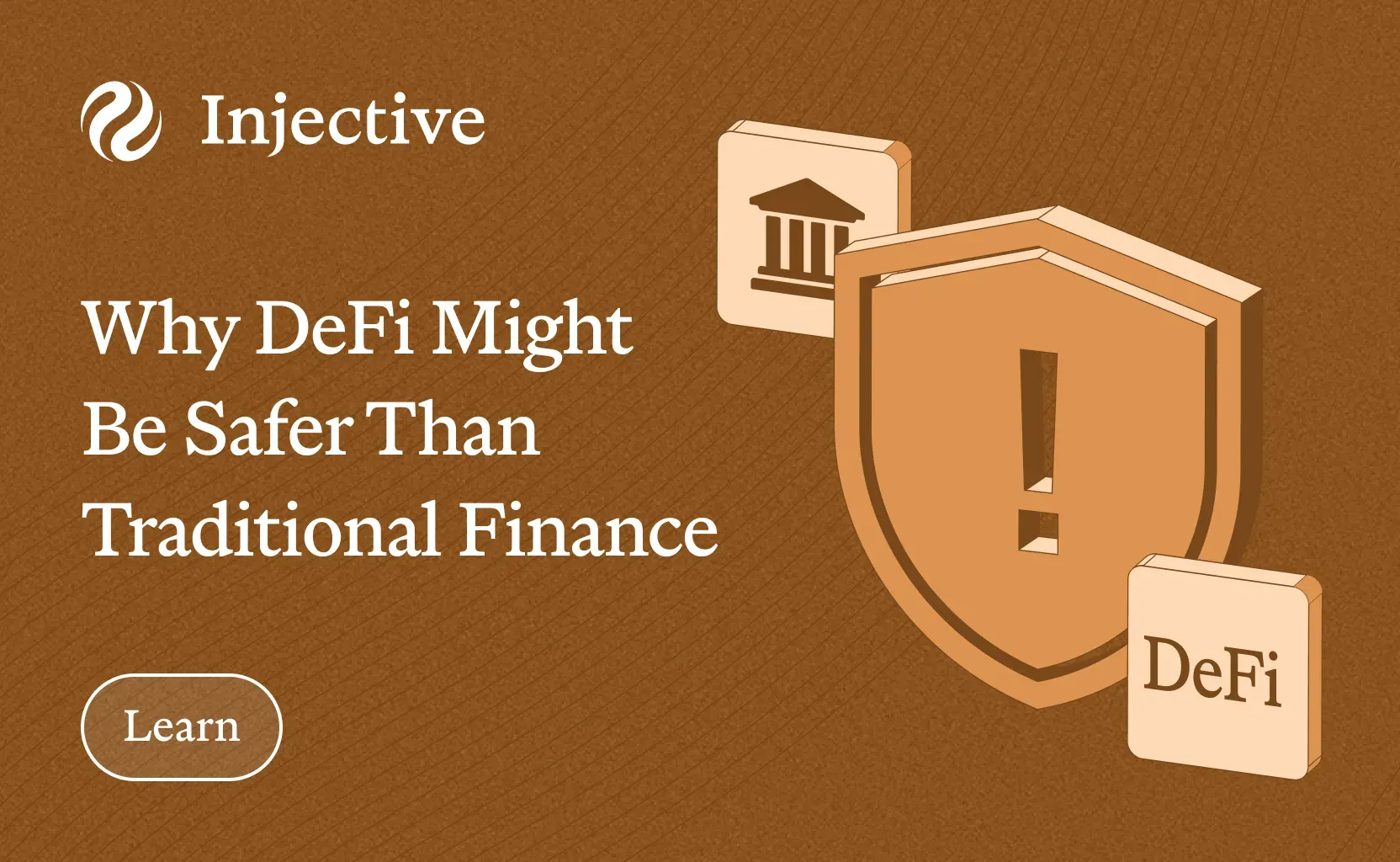
The idea that decentralized finance could be safer than traditional finance may seem counterintuitive at first. Traditional financial systems have existed for centuries and are supported by governments, regulations, and large institutions. DeFi, by contrast, is a relatively new financial paradigm built on blockchain technology and smart contracts.
Despite its novelty, DeFi introduces structural differences that address some of the systemic risks present in traditional finance. Understanding these differences helps explain why many participants view decentralized finance as a compelling alternative.
What Is Decentralized Finance?
Decentralized finance, or DeFi, refers to a collection of financial applications built on public blockchains that operate without centralized intermediaries. These applications enable trading, lending, borrowing, derivatives, and other financial activities through smart contracts.
DeFi protocols are permissionless, meaning anyone with a compatible wallet and internet access can interact with them. Users maintain custody of their assets and rely on code rather than institutions to enforce rules.
Smart contracts automate financial logic, reducing reliance on manual processes and discretionary decision-making. This automation changes how trust, risk, and accountability are distributed across the system.
What Is Traditional Finance?
Traditional finance includes banks, brokerages, clearinghouses, payment processors, and other centralized institutions that facilitate financial activity.
These systems rely on intermediaries to custody assets, process transactions, manage risk, and enforce compliance. Trust is placed in institutions, regulators, and legal frameworks rather than in transparent execution.
While traditional finance provides stability, consumer protections, and familiarity, it also introduces opacity, settlement delays, and concentration of risk within large entities.
Key Structural Differences Between DeFi and Traditional Finance
The primary difference between DeFi and traditional finance lies in how trust is established and enforced.
Traditional finance depends on institutional trust, regulatory oversight, and discretionary risk management. Users must trust intermediaries to act in their best interest and remain solvent.
DeFi relies on transparent code, open ledgers, and cryptographic verification. Rules are enforced automatically by smart contracts, and financial activity is publicly observable.
These structural differences influence transparency, custody, settlement, and systemic risk.
Transparency and Auditability
Transparency is one of the most frequently cited safety advantages of decentralized finance.
In traditional finance, institutions disclose balance sheets, leverage ratios, and risk exposure on periodic schedules. This delayed reporting can obscure deteriorating conditions until problems become severe, as seen in multiple historical banking crises.
Additionally, off-balance-sheet arrangements and complex derivatives can mask true exposure, making it difficult for regulators and market participants to assess real-time risk.
DeFi protocols operate on public blockchains where transaction histories, collateralization ratios, and contract logic are visible at all times. Anyone can independently verify positions, monitor protocol health, and audit system behavior without relying on institutional disclosures.
This real-time transparency reduces information asymmetry and allows risk to be identified and addressed earlier.
Custody and Counterparty Risk
In traditional finance, users entrust assets to intermediaries such as banks or brokers. This introduces counterparty risk if the institution becomes insolvent or mismanages funds.
Custodial failures, fraud, and rehypothecation have historically resulted in losses for depositors and investors.
In DeFi, users typically retain custody of their assets and interact directly with smart contracts. Funds move only according to predefined rules, reducing reliance on trusted third parties.
This self-custodial model shifts responsibility to users but reduces institutional counterparty risk.
Settlement and Operational Risk
Traditional finance relies on layered settlement processes involving clearinghouses, custodians, and payment networks. Settlement delays can introduce reconciliation risk and counterparty exposure.
Operational failures, outages, or manual errors can disrupt markets and delay access to funds.
DeFi transactions settle onchain, often within minutes. Settlement is final and atomic, reducing reconciliation complexity and settlement risk.
While onchain settlement depends on network availability, it removes many operational intermediaries.
Systemic Risk and Failure Modes
Traditional finance is characterized by highly interconnected institutions. Large banks, clearinghouses, and market makers often act as critical nodes within the financial system.
When these entities fail, the impact can spread rapidly across markets, leading to liquidity freezes and requiring coordinated intervention by central authorities. Historical crises have demonstrated how hidden leverage and concentrated risk can destabilize entire economies.
DeFi systems are more modular by design. Protocols operate independently, and failures are typically isolated to specific applications rather than the entire ecosystem.
While contagion is still possible, particularly through shared collateral or liquidity, DeFi failures are often transparent and resolved through market mechanisms rather than discretionary bailouts.
Risks Unique to DeFi
Despite its advantages, DeFi introduces new categories of risk.
Smart contract vulnerabilities, oracle failures, and economic exploits can result in rapid losses. These risks stem from code complexity and adversarial environments.
User error, such as interacting with malicious contracts or mismanaging keys, also remains a significant concern.
DeFi safety depends heavily on protocol design, audits, and informed user behavior.
Why DeFi Safety Matters Today
As financial activity increasingly moves online, evaluating the safety of different systems has become more important for individuals, institutions, and regulators.
Traditional finance faces growing complexity, interconnectedness, and reliance on opaque intermediaries. DeFi offers alternative architectures built on transparency, automation, and user custody.
Understanding where decentralization may reduce, redistribute, or transform risk helps participants make informed decisions about how to engage with modern financial systems.
Practical DeFi Use Cases Where Safety Properties Matter
The safety characteristics of DeFi become clearer when examined through real-world use cases.
Self-Custodial Trading
DeFi exchanges allow users to trade assets directly from their wallets without depositing funds into centralized platforms. This reduces exposure to custodial failures, exchange insolvency, and withdrawal restrictions.
Onchain Lending and Borrowing
DeFi lending protocols use overcollateralization and automated liquidation mechanisms to manage risk. Collateral ratios are visible onchain, allowing participants to assess solvency in real time.
Transparent Derivatives Markets
Decentralized derivatives platforms enforce margin requirements programmatically. Positions are marked to market continuously, reducing hidden leverage and counterparty exposure.
Cross-Border Value Transfer
DeFi enables near-instant global transfers without reliance on correspondent banking networks. This can reduce settlement risk and improve access during periods of financial stress.
Real-Time Risk Management in DeFi
Risk management in DeFi operates continuously rather than in discrete reporting intervals.
Collateralized positions are marked to market in real time, and smart contracts enforce margin requirements automatically. When positions fall below required thresholds, liquidations occur programmatically to protect protocol solvency.
This design limits the accumulation of unrecognized losses and reduces reliance on human intervention during periods of stress.
In traditional finance, margin calls and risk assessments may occur with delays, allowing leverage to build unnoticed. DeFi’s real-time enforcement offers a different approach to controlling systemic exposure.
Permissionless Access and Reduced Gatekeeping
Traditional financial systems rely heavily on account approvals, identity checks, and institutional discretion. Accounts may be frozen, restricted, or denied based on regulatory, political, or operational considerations.
DeFi protocols are permissionless. Any user with a compatible wallet can access financial services without seeking approval. This reduces exclusion risk and prevents unilateral account restrictions.
While permissionless access introduces compliance challenges, it also eliminates certain forms of institutional failure and abuse.
DeFi on Injective
Injective supports a decentralized financial ecosystem focused on transparent, onchain markets and high-performance trading.
By enabling decentralized derivatives, order books, and composable protocols, Injective provides infrastructure designed to reduce operational risk while preserving decentralization.
This environment allows users to explore DeFi with greater control and visibility.
Who DeFi May Be Safer For
DeFi may offer safety advantages for advanced users who understand smart contract risks and manage custody responsibly.
For institutions and beginners, traditional finance may still provide protections that DeFi lacks.
Evaluating safety depends on user experience, risk tolerance, and system design.
Governance and Rule Enforcement
Governance structures influence how financial systems respond to risk and failure.
Traditional finance relies on discretionary decision-making by regulators, executives, and policymakers. Rules can change rapidly in response to crises, sometimes retroactively, which can introduce uncertainty for participants.
DeFi governance is often encoded directly into protocol logic. Changes to rules typically require transparent proposals, community participation, and onchain voting.
This predictability reduces ambiguity around enforcement but also places responsibility on protocol designers and token holders to manage upgrades responsibly.
Common DeFi Safety Terminology
Understanding DeFi safety requires familiarity with several commonly used terms.
Smart Contracts
Smart contracts are self-executing programs deployed on blockchains that automatically enforce financial rules. Errors in smart contract logic can introduce risk, making audits critical.
Self-Custody
Self-custody refers to users controlling their own private keys rather than relying on custodial intermediaries. This reduces counterparty risk but increases personal responsibility.
Liquidation
Liquidation is the process by which undercollateralized positions are closed automatically to protect protocol solvency.
Oracle
Oracles provide external data, such as prices, to smart contracts. Faulty or manipulated oracle data can lead to incorrect liquidations or losses.
Permissionless Access
Permissionless systems allow anyone to participate without approval, reducing gatekeeping but increasing the need for user education.
Historical Case Studies: Failures in Traditional Finance
History provides numerous examples where traditional financial institutions failed despite regulation and oversight.
Bank collapses, liquidity crises, and mispriced risk have repeatedly required government intervention to prevent systemic collapse. These events illustrate how opacity and concentration can undermine safety.
While DeFi is not immune to failure, its transparency and modularity offer alternative mechanisms for identifying and containing risk.
FAQ
Is DeFi really safer than traditional finance?
DeFi reduces some risks while introducing others. Safety depends on design and usage.
Can DeFi fail?
Yes. Individual protocols can fail, but systemic impact may be more limited.
Should beginners use DeFi?
DeFi requires education and risk awareness.