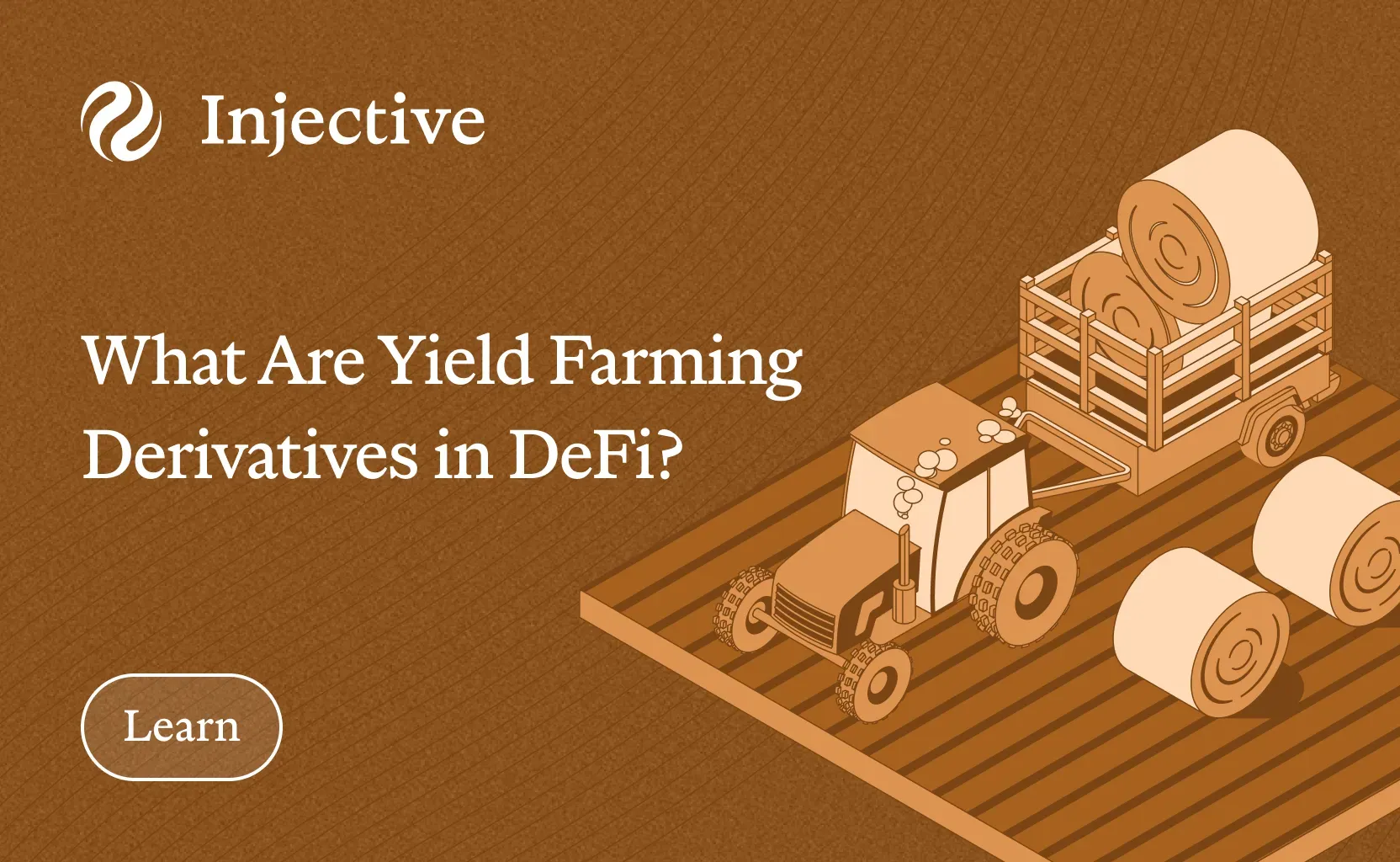
Yield farming derivatives are financial instruments that allow users to gain exposure to the returns generated by yield farming strategies without directly participating in the underlying DeFi protocols. Instead of supplying liquidity, managing vault positions, or actively compounding rewards, users trade derivative products whose value is linked to the performance of a specific yield strategy.
In decentralized finance, yield farming has become a common way to earn returns by providing liquidity or staking assets across protocols. While these strategies can be profitable, they often require active management, technical knowledge, and constant monitoring of risks such as impermanent loss, reward dilution, and smart contract vulnerabilities. Yield farming derivatives abstract this complexity by separating yield exposure from operational execution.
For beginners, the idea of a derivative tied to yield may sound complex. At a conceptual level, yield farming derivatives function similarly to traditional financial derivatives. They allow market participants to gain exposure to an underlying financial outcome while defining risk and avoiding direct ownership or execution of the underlying activity.
As DeFi markets mature, yield farming derivatives represent an important step toward making yield access more flexible, tradable, and accessible across onchain financial systems.
How Yield Farming Derivatives Work
A yield farming derivative is built around an underlying yield-generating strategy, such as a liquidity pool, lending market, or yield aggregator vault. The derivative references the performance of that strategy and allows users to trade exposure to it through a standardized financial instrument.
Unlike direct yield farming, users interacting with derivatives do not deposit assets into the original protocol. Instead, they trade a contract whose price reflects expected or realized yield over a given period.
Step-by-step flow
- Underlying yield source is defined: A specific yield strategy, such as a vault or liquidity pool, is selected as the reference.
- Performance tracking: Yield data is measured using transparent onchain metrics such as reward emissions, fees, or vault performance.
- Derivative creation: A contract is created whose value is linked to yield outcomes rather than token ownership.
- Market trading: Users buy or sell the derivative based on their expectations of future yield.
- Settlement or repricing: The derivative reflects realized yield through settlement events or price movements over time.
This structure allows yield to become a tradable variable rather than something that must be earned through direct protocol interaction.
What users actually interact with
Most users interact with yield farming derivatives through trading interfaces similar to other DeFi derivatives markets. Instead of managing liquidity tokens, users select position size and market exposure. Pricing models, yield tracking, and settlement mechanics operate behind the scenes.
Technical constraints and assumptions
Yield farming derivatives rely on accurate onchain data, sufficient market liquidity, transparent pricing models, and robust smart contract execution. Weaknesses in any of these areas can affect how closely derivative prices track underlying yield performance.
Yield Farming Derivatives vs Traditional Yield Farming
Traditional yield farming requires users to deposit assets directly into DeFi protocols. Returns depend on protocol incentives, trading volume, and reward emissions, while users assume operational and technical risk.
Yield farming derivatives change this dynamic.
With derivatives:
- Users do not manage liquidity positions
- Yield exposure is financial rather than operational
- Positions can be entered or exited without protocol-specific constraints
- Capital remains flexible and mobile
Instead of earning yield by locking assets into protocols, users trade expectations about yield performance. This abstraction mirrors how traditional finance separates asset ownership from financial exposure.
Yield Farming Derivatives vs Yield Aggregators
Yield farming derivatives are often confused with yield aggregators, but the two serve different purposes.
Yield aggregators automate yield farming by allocating user funds across protocols to optimize returns. Users still supply capital directly and remain exposed to smart contract risk, liquidity risk, and execution complexity.
Yield farming derivatives, by contrast:
- Do not require depositing assets into yield strategies
- Provide exposure through financial contracts
- Allow yield to be traded independently of execution
Aggregators optimize execution. Derivatives abstract execution entirely.
How Yield Farming Derivatives Are Structured
Yield farming derivatives can take different structural forms depending on how yield exposure is defined and settled. Understanding these structures helps users evaluate risk, pricing behavior, and suitability.
Strategy-specific vs index-based derivatives
Some yield farming derivatives reference a single strategy, such as a specific vault or liquidity pool. Others track an index composed of multiple yield sources. Strategy-specific derivatives offer precise exposure, while index-based derivatives reduce concentration risk by aggregating multiple strategies.
Fixed vs variable yield exposure
Certain derivatives may offer exposure to variable yield, where returns fluctuate based on protocol performance. Others may structure yield exposure over a defined period, allowing markets to price expected returns in advance. These structural choices affect volatility, pricing dynamics, and risk profiles.
Pricing and expectation formation
Derivative prices reflect collective market expectations about future yield, risk, and liquidity conditions. Changes in protocol incentives, market activity, or DeFi participation can all influence pricing well before actual yield changes are realized.
Key Properties of Yield Farming Derivatives
Separation of yield and execution
Yield farming derivatives separate the act of earning yield from the act of managing yield strategies. This reduces complexity for users and enables broader participation.
Tradable yield exposure
Yield becomes a tradable financial variable, enabling entry, exit, and rebalancing without unwinding underlying protocol positions.
Capital efficiency
Because assets are not locked into protocols, capital can be deployed across multiple markets simultaneously.
Price discovery for yield
Open markets provide transparent signals around expected returns, risk, and volatility for yield strategies.
Main Use Cases of Yield Farming Derivatives
Passive yield exposure
Users gain yield exposure without managing liquidity pools, vaults, or reward harvesting.
Yield speculation
Traders can speculate on whether yields will rise or fall based on incentives, protocol usage, or market conditions.
Hedging yield risk
Active yield farmers can hedge declining returns by taking offsetting derivative positions.
Portfolio diversification
Derivatives allow exposure to multiple yield sources without fragmented capital allocation.
Numerical Walkthrough: Direct Farming vs Yield Farming Derivative
Assume a yield strategy is expected to generate 12% annualized returns over three months.
With direct farming, a user deposits assets into the protocol and manages liquidity, rewards, and exit timing. Returns depend on execution quality and market conditions.
With a yield farming derivative, the user trades a position linked to that expected yield. If realized returns exceed expectations, the derivative appreciates. If yields decline, losses are limited to the derivative position without managing protocol exits.
This illustrates how derivatives decouple yield exposure from execution.
Common Beginner Mistakes With Yield Farming Derivatives
Common mistakes include:
- Assuming derivatives eliminate all risk
- Ignoring liquidity and pricing dynamics
- Misunderstanding settlement mechanics
- Treating yield exposure as guaranteed income
Education and conservative position sizing are essential.
Who Yield Farming Derivatives Are Not Suitable For
Yield farming derivatives may not be appropriate for:
- Users unfamiliar with DeFi fundamentals
- Participants seeking predictable income
- Traders unwilling to study derivatives
- Individuals uncomfortable with price volatility
Why Yield Farming Derivatives Matter Today
DeFi yield strategies have grown more complex and competitive. Returns fluctuate rapidly, and managing yield effectively requires time, expertise, and constant attention.
Yield farming derivatives matter today because they:
- Lower barriers to yield participation
- Improve capital mobility
- Enable sophisticated risk management
- Support efficient markets through price discovery
They represent a broader shift toward mature, modular DeFi financial infrastructure.
Risks and Challenges
Yield farming derivatives introduce distinct risks that users must understand.
Market and liquidity risk
Thin liquidity can lead to pricing inefficiencies, slippage, and tracking error between derivatives and underlying yield.
Tracking and basis risk
Derivatives may not perfectly track realized yield due to data delays, pricing assumptions, or market sentiment.
Smart contract risk
As with all DeFi products, smart contract vulnerabilities remain a concern.
Market maturity risk
Yield farming derivatives are still emerging products. Limited historical data and evolving market structure can increase uncertainty.
Yield Farming Derivatives on Injective
Injective provides infrastructure designed for advanced DeFi derivatives through fast execution, low latency, and a fully onchain order book model.
This architecture supports efficient price discovery for yield-linked products and allows yield exposure to integrate with broader DeFi trading strategies. Yield farming derivatives can coexist alongside spot and derivatives markets within a unified onchain ecosystem.
How to Get Started With Yield Farming Derivatives
Prerequisites
- Understanding of DeFi basics
- Familiarity with yield farming mechanics
- Awareness of derivative risk
Practical learning path
- Learn DeFi fundamentals through Injective educational content
- Study yield farming mechanics across protocols
- Understand derivative structures and pricing
- Start with small positions
- Monitor performance and refine risk exposure
FAQ
What are yield farming derivatives in simple terms?
They are contracts that provide exposure to DeFi yield without directly farming.
Are yield farming derivatives safer than yield farming?
They reduce operational complexity but introduce market risk.
Do yield farming derivatives guarantee returns?
No. Returns depend on yield performance and market pricing.
Can beginners use yield farming derivatives?
Beginners can use them cautiously after learning core concepts.
How are yield farming derivatives different from yield aggregators?
Aggregators manage execution; derivatives provide tradable exposure.
Can yield farming derivatives lose value?
Yes. Poor yield performance or pricing inefficiencies can lead to losses.
Are yield farming derivatives actively managed?
No. Users trade exposure rather than managing execution.
Why are yield farming derivatives important for DeFi?
They make yield more accessible, flexible, and efficient.