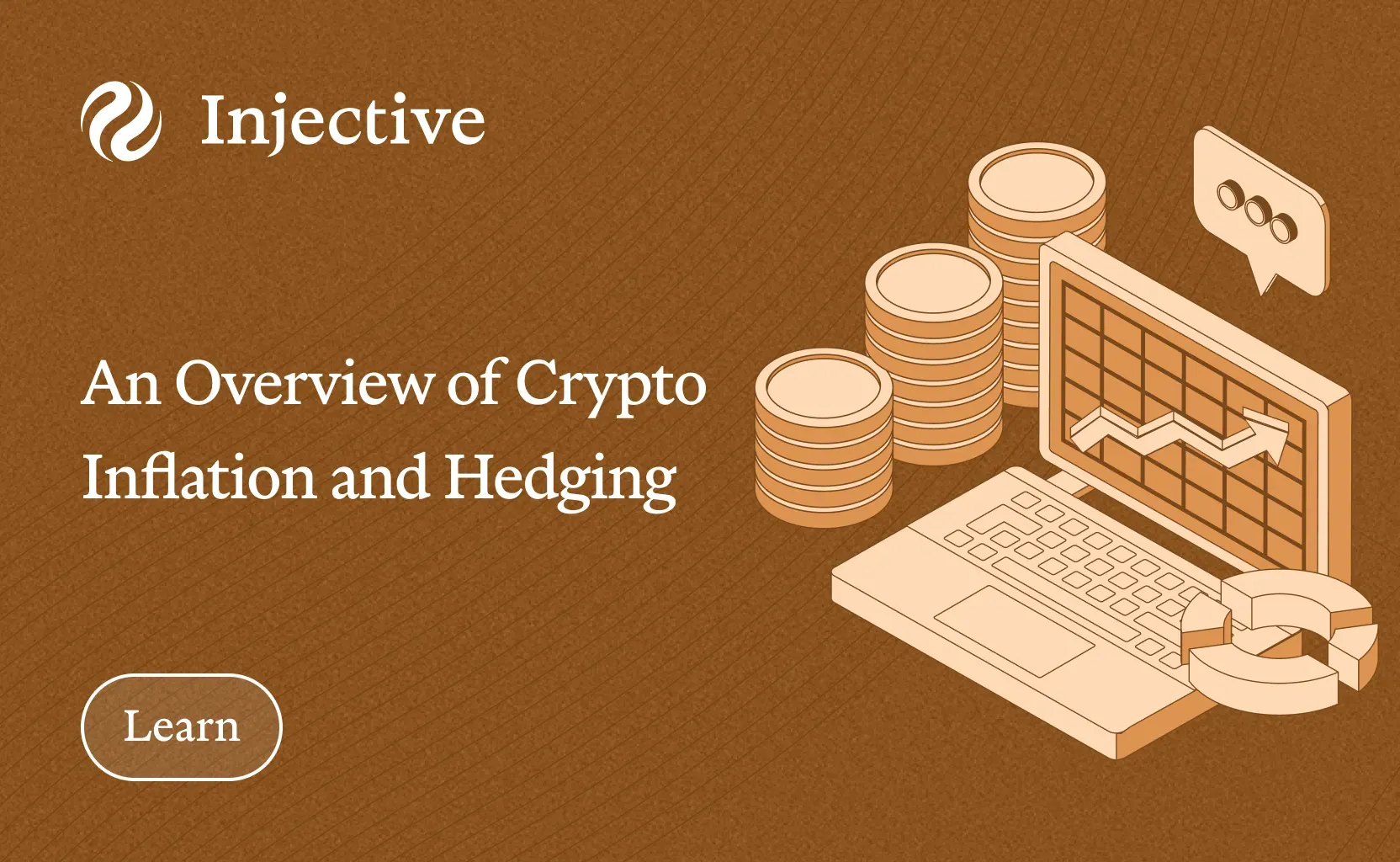
Crypto inflation hedging refers to strategies used to protect purchasing power against inflationary pressures using digital assets and onchain financial instruments. As global monetary systems expand supply and traditional assets face inflation risk, crypto markets have emerged as an alternative arena for hedging inflation exposure.
Unlike traditional inflation hedging, which often relies on commodities, real estate, or inflation-linked bonds, crypto inflation hedging leverages programmable assets, decentralized finance, and transparent monetary policies. Understanding how inflation manifests in crypto-native contexts is essential for building resilient portfolios.
This guide explains what inflation means in crypto markets, how inflation risk differs from traditional finance, and which tools are commonly used to hedge inflation in decentralized ecosystems.
Understanding Inflation in Crypto Markets
Inflation in crypto markets can refer to multiple phenomena, and it is important to distinguish between them clearly.
At the protocol level, inflation typically describes token issuance schedules. Many blockchains introduce new tokens through block rewards, staking rewards, or incentive programs. These emissions increase circulating supply over time and can dilute existing holders if demand does not grow proportionally.
At the macro level, crypto markets are influenced by fiat monetary policy. Expansionary fiscal spending, interest rate changes, and currency debasement can all affect investor behavior and capital flows into digital assets.
Unlike fiat systems, most crypto protocols publish transparent and deterministic monetary policies. This transparency allows participants to model inflation dynamics in advance rather than reacting to discretionary policy decisions.
Understanding both protocol-level inflation and macroeconomic inflation is critical for designing effective hedging strategies.
How Inflation Affects Crypto Assets
Inflation impacts crypto assets in nuanced ways that extend beyond simple price movements.
At the protocol level, inflation determines how new supply enters circulation. High issuance rates can dilute existing holders, particularly if token emissions are used primarily as incentives rather than tied to productive network activity.
Assets with capped or declining supply schedules may benefit from scarcity dynamics, but scarcity alone is insufficient. Demand must be sustained through real utility, security, and network adoption. Without these factors, even scarce assets may underperform.
Inflation also shapes investor behavior. During periods of rising inflation expectations, market participants often seek assets perceived as inflation-resistant, increasing speculative inflows and volatility.
Over time, inflation affects portfolio construction, risk tolerance, and time horizons. Effective hedging requires understanding these behavioral feedback loops in addition to supply mechanics.
Why Inflation Hedging Matters in Crypto
Crypto participants face inflation risk from multiple directions. At the protocol level, token emissions can dilute holdings over time. At the macro level, fiat currency inflation can reduce purchasing power and influence capital flows into and out of crypto markets.
Without intentional inflation hedging, portfolios may experience a gradual erosion of real value even if nominal balances increase. This is particularly relevant in environments where yields appear high but are offset by equally high token issuance.
Inflation hedging matters because it forces participants to evaluate returns in real terms rather than nominal terms. By focusing on purchasing power preservation, participants can avoid strategies that look profitable on the surface but fail over longer horizons.
Effective inflation hedging supports long-term participation and reduces dependence on favorable market cycles.
Common Crypto Inflation Hedging Strategies
Crypto markets provide several broad categories of inflation hedging approaches, each with distinct assumptions and risks.
Holding scarce assets
Some crypto assets are designed with fixed or declining supply schedules. These assets aim to preserve purchasing power by limiting dilution over time.
However, scarcity must be paired with demand drivers such as network usage, security, and ecosystem growth. Scarcity without utility does not guarantee inflation protection.
Yield-generating strategies
Yield strategies attempt to offset inflation through income generation. Staking rewards, lending interest, and liquidity provision can all contribute to yield.
To function as true inflation hedges, yields must exceed token emissions, fees, and risk-adjusted opportunity cost. Nominal yield alone is insufficient.
Stablecoins and cash management
Stablecoins reduce price volatility relative to fiat currencies and can be useful for short-term capital preservation.
However, stablecoins remain exposed to fiat inflation and may introduce counterparty or regulatory risk depending on design.
Diversification across asset types
Diversification reduces reliance on any single inflation narrative. Combining scarce assets, yield strategies, and liquid reserves improves resilience across market regimes.
Hedging Inflation Using DeFi Instruments
Decentralized finance enables more advanced inflation hedging strategies beyond simple asset holding.
Derivatives such as perpetual futures and options allow users to hedge directional exposure or protect downside risk without liquidating underlying assets. These tools can be used to offset inflation-driven volatility or macroeconomic uncertainty.
Yield-bearing structured products combine income generation with predefined risk profiles. While these products can help offset inflation, they introduce complexity and reliance on smart contract execution.
DeFi composability allows users to layer hedging strategies, such as combining yield with protective positions. However, increased composability also increases risk, making conservative position sizing and continuous monitoring essential.
Inflation Hedging vs Speculation
Hedging and speculation are often confused in crypto markets, but they serve different objectives.
Inflation hedging focuses on preserving purchasing power and reducing exposure to adverse monetary conditions. Success is measured by stability and resilience rather than maximum returns.
Speculation seeks to profit from price movements and often involves higher volatility and risk. While speculation can generate gains, it may fail to protect against sustained inflation.
Clear separation of these objectives helps participants design appropriate strategies.
Risks and Trade-Offs
Crypto inflation hedging involves several risks that must be managed carefully.
Volatility risk can undermine hedges during sharp market movements. Inflation-protective assets may still experience significant short-term drawdowns.
Smart contract risk affects DeFi-based strategies. Protocol failures, exploits, or design flaws can result in partial or total loss of funds.
Liquidity risk may limit the ability to enter or exit positions efficiently, particularly during periods of market stress.
Opportunity cost is another consideration. Capital allocated to hedging strategies may underperform during risk-on market phases.
Regulatory uncertainty can also impact inflation hedges, especially those involving stablecoins or derivatives.
Understanding these trade-offs helps participants balance protection with flexibility.
Crypto Inflation Hedging on Injective
Injective provides an onchain environment suited for inflation hedging strategies that require speed, transparency, and flexibility.
Users can access derivatives, yield-generating protocols, and composable DeFi primitives that enable advanced exposure management.
Fast execution and transparent settlement allow participants to adjust hedging strategies efficiently as macro conditions or protocol parameters evolve.
Injective’s focus on financial infrastructure supports sophisticated inflation-aware portfolio construction.
Crypto Inflation Hedging vs Traditional Inflation Hedging
Inflation hedging has long been a concern in traditional finance, where investors commonly rely on assets such as commodities, real estate, inflation-linked bonds, or equities with pricing power.
Traditional inflation hedges often depend on centralized monetary policy, opaque supply dynamics, and intermediated financial systems. While these instruments can be effective, they are influenced by regulatory constraints, geographic limitations, and delayed policy responses.
Crypto inflation hedging differs in several important ways. Most crypto protocols publish transparent and deterministic monetary policies, allowing participants to model supply growth in advance. Onchain assets settle globally, operate continuously, and can be accessed without traditional intermediaries.
Crypto-based hedging strategies also enable programmable responses to inflation. Participants can dynamically adjust exposure using derivatives, yield strategies, and composable DeFi tools in real time rather than relying on long-term structural allocations.
However, crypto inflation hedging introduces new risks, including higher volatility, smart contract risk, and evolving regulatory frameworks. These factors mean crypto hedges are not direct substitutes for traditional ones but rather complementary tools.
Understanding the differences between crypto and traditional inflation hedging helps participants choose the appropriate mix of strategies based on risk tolerance, time horizon, and access constraints.
Why Crypto Inflation Hedging Matters Today
Inflation has re-emerged as a dominant theme in global markets.
Persistent monetary expansion, shifting interest rate regimes, and geopolitical uncertainty have increased awareness of purchasing power risk. These dynamics affect both traditional and digital asset markets.
Crypto inflation hedging matters today because crypto assets operate with transparent monetary policies that can be evaluated in advance. This allows participants to proactively manage inflation exposure rather than react to policy changes after they occur.
As institutional participation grows, inflation-aware strategies are increasingly viewed as a baseline requirement rather than a niche consideration.
Inflation Hedging for Different Participant Profiles
Inflation hedging strategies vary significantly depending on participant objectives and time horizons.
Long-term holders typically focus on preserving purchasing power over multi-year periods. These participants may emphasize scarce assets, conservative yield strategies, and minimal leverage to reduce exposure to short-term volatility.
Active traders may approach inflation hedging dynamically. Derivatives and tactical allocation adjustments allow traders to respond to macroeconomic shifts, interest rate changes, and inflation-driven market sentiment.
DeFi-native users may combine staking, lending, and structured products to generate real yield while managing protocol-specific risks. These strategies require active monitoring and a strong understanding of smart contract mechanics.
Aligning inflation hedging strategies with participant profiles helps avoid mismatched risk assumptions.
How to Get Started With Crypto Inflation Hedging
Prerequisites
- Basic understanding of macroeconomics
- Familiarity with crypto markets and DeFi
Practical learning path
- Study inflation dynamics in both fiat and crypto contexts
- Identify assets or protocols with favorable monetary design
- Start with conservative allocations
- Monitor macro conditions and protocol parameters
FAQ
What is crypto inflation hedging in simple terms?
Crypto inflation hedging involves using digital assets or DeFi strategies to protect purchasing power against inflation.
Is crypto inflation hedging the same as speculation?
No. Hedging focuses on reducing risk, while speculation seeks to profit from price movements.
Do high-yield tokens automatically hedge inflation?
No. Yields must exceed token inflation and risk to preserve real value.
Are stablecoins good inflation hedges?
Stablecoins reduce volatility but remain exposed to fiat inflation.
Is crypto inflation hedging risk-free?
No. All hedging strategies involve trade-offs and potential losses.
Who should consider crypto inflation hedging?
Participants concerned with long-term purchasing power may benefit from inflation-aware strategies.