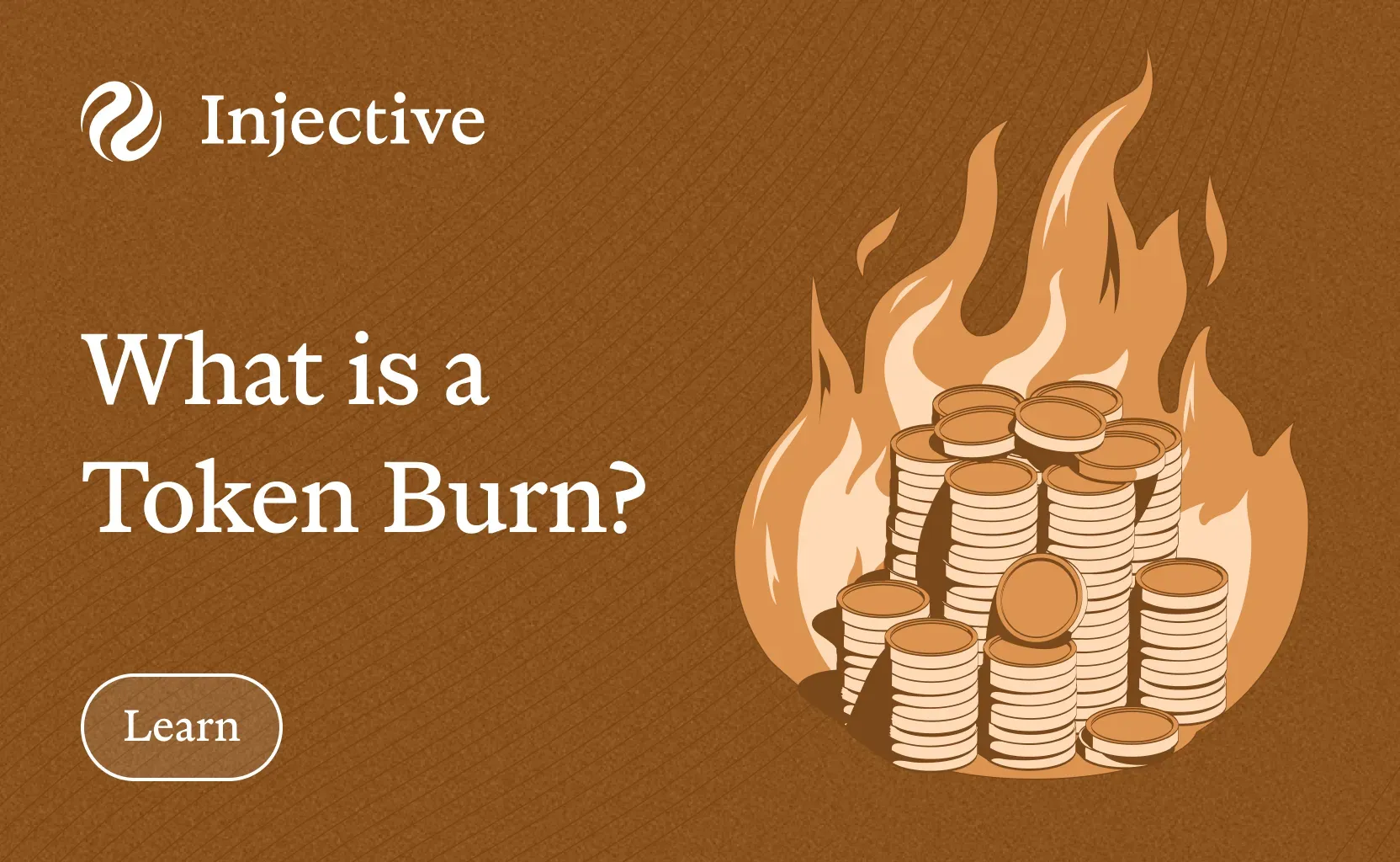
A token burn is a mechanism used in cryptocurrency networks to permanently remove tokens from circulation. By reducing the available supply, token burns can influence scarcity, incentives, and long-term economic design within blockchain ecosystems.
Understanding token burns helps explain how crypto supply is managed, why some projects choose to burn tokens, and what implications this has for users and investors.
What Is a Token Burn?
A token burn is a mechanism used in cryptocurrency networks to permanently remove tokens from circulation.
In practical terms, a token burn occurs when tokens are sent to a blockchain address that cannot be accessed or when smart contract logic permanently destroys them. Once burned, these tokens are mathematically and cryptographically unrecoverable.
Token burns are used as part of broader tokenomics strategies to influence supply, incentives, and long-term economic behavior within blockchain ecosystems.
Understanding token burns is essential for interpreting crypto supply dynamics and evaluating claims about scarcity and value.
How Token Burns Work
Token burns are executed through transparent, verifiable blockchain transactions that permanently remove tokens from circulation.
One common method involves sending tokens to a burn address. A burn address is designed without a known private key, meaning no participant can ever retrieve or move the tokens once they are sent. Anyone can verify balances at these addresses onchain.
Another approach uses smart contract logic to destroy tokens directly. In these cases, a contract reduces user balances and updates the total supply variable, ensuring burned tokens no longer exist within the system.
Some protocols automate burns based on predefined rules. For example, a percentage of transaction fees may be burned every time the protocol is used. Other protocols trigger burns at fixed intervals or after reaching specific milestones.
Because all of these actions occur onchain, token burns are auditable and transparent, allowing users to independently confirm supply changes.
Why Projects Burn Tokens
Projects burn tokens for a range of economic, strategic, and governance-related reasons.
One motivation is long-term supply discipline. Burning tokens can reduce circulating supply over time, particularly when paired with ongoing issuance from rewards or incentives.
Burns may also be used to align incentives between users, token holders, and the protocol itself. By tying burns to usage or revenue, protocols can reward long-term participation rather than short-term speculation.
In some cases, token burns serve as a signaling mechanism. Announced burns can communicate confidence in a project’s long-term value, although this signal is only meaningful when supported by real adoption and utility.
Governance-driven burns are another category, where token holders collectively decide to reduce supply in response to changing economic conditions or protocol maturity.
Token Burns vs Inflation
Token burns are frequently discussed alongside inflation and deflation, but the relationship between these concepts is often misunderstood.
Inflation refers to an increase in the circulating supply of tokens over time. In many crypto networks, inflation occurs through block rewards, staking rewards, or other issuance mechanisms designed to incentivize participation.
Token burns can offset inflation by removing tokens from circulation. However, whether a network is inflationary or deflationary depends on the net balance between issuance and burns. A protocol that issues more tokens than it burns remains inflationary, even if burns occur regularly.
Deflationary narratives can be misleading when burns are small relative to total supply. Evaluating long-term supply dynamics requires examining issuance schedules, burn rates, and projected network usage together.
Token Burns vs Buybacks in Traditional Finance
Token burns are often compared to corporate stock buybacks in traditional financial markets because both mechanisms reduce the number of outstanding units.
In a stock buyback, a company uses capital to repurchase its own shares from the open market. This reduces the share count and can increase earnings per share, but it does not inherently improve the company’s underlying business performance.
Similarly, token burns reduce circulating supply but do not automatically increase a token’s value. Market participants ultimately price assets based on adoption, revenue generation, utility, and long-term sustainability.
A key difference is governance. Corporate buybacks are decided by management teams, whereas token burns may be governed by decentralized communities or automated protocol rules.
This comparison helps frame token burns as a capital management and signaling mechanism rather than a guaranteed driver of appreciation.
Common Types of Token Burns
There are several common models used to burn tokens.
Some projects implement scheduled burns, where a fixed amount of tokens is burned at regular intervals.
Others use usage-based burns, where a portion of transaction fees or protocol revenue is burned automatically.
Event-driven burns may also occur, such as burns tied to milestones, upgrades, or governance proposals.
Each model has different implications for predictability and incentives.
Risks and Misconceptions of Token Burns
Token burns are frequently misunderstood and sometimes misused as marketing tools.
One risk is overemphasis on scarcity narratives. Burning tokens without increasing demand or utility does not create sustainable value and may distract from fundamental development.
Another concern is transparency. If burn mechanisms are discretionary or poorly documented, users may not be able to verify how or when burns occur.
Burns can also negatively impact liquidity. Aggressive supply reduction may reduce available trading supply, increasing volatility and making markets less efficient.
Finally, burns do not address governance or adoption challenges. Strong tokenomics require more than supply manipulation alone.
Token Burns in the Crypto Ecosystem
Token burns appear across a wide range of crypto projects, but their role varies significantly by context.
Some layer-1 networks use burns to balance issuance from block rewards. Application-layer protocols may burn tokens generated from fees, tying supply reduction directly to usage.
In decentralized finance, token burns are sometimes combined with staking or governance rights, influencing both economic incentives and protocol control.
Because implementations differ, token burns should always be evaluated as part of a broader tokenomics model rather than in isolation.
Token Burns and Long-Term Tokenomics
Long-term tokenomics focuses on how supply, demand, incentives, and governance interact over the lifecycle of a protocol.
Token burns can contribute to sustainability when they are tied to real economic activity, such as protocol fees or network usage. In these cases, increased adoption directly influences supply dynamics.
However, burns alone cannot compensate for weak demand or poor product-market fit. Protocols that rely heavily on burns without generating real usage risk creating short-lived narratives rather than durable economic systems.
Effective tokenomics balances issuance, burns, rewards, and governance in a way that supports growth while managing dilution.
Real-World Token Burn Example
Consider a blockchain network that charges transaction fees in its native token.
When users submit transactions, a portion of each fee is automatically burned through a smart contract. As network usage increases, the absolute number of tokens burned also increases.
If issuance remains constant while usage grows, the burn mechanism can meaningfully reduce net supply growth. This creates a direct link between protocol adoption and supply dynamics.
However, if usage declines or issuance increases, the burn mechanism may have little long-term impact. This example highlights why burns must be evaluated in context rather than in isolation.
Token Burns and Market Psychology
Token burns often influence market perception as much as actual supply.
Announcements of large burns can generate short-term excitement, but these reactions may fade if underlying fundamentals do not improve. Over time, markets tend to price in predictable burn schedules.
Understanding the difference between narrative-driven reactions and structural economic effects is important for interpreting burn-related news.
Why Token Burns Matter Today
Token burns have become a common feature of modern crypto economic design.
As protocols mature, projects increasingly focus on sustainable tokenomics rather than rapid issuance. Burns are now often paired with usage-based incentives, governance decisions, and long-term ecosystem planning.
Rather than serving as one-time events, token burns are increasingly integrated into ongoing economic systems that evolve alongside protocol adoption.
Injective’s Token Burn and Community Buyback Model
Injective initially implemented a token burn mechanism as part of its broader tokenomics strategy. In this model, a portion of protocol value was used to remove tokens from circulation, reinforcing supply discipline and aligning long-term incentives.
Over time, Injective transitioned from a direct burn model toward a community-oriented buyback approach. Instead of permanently destroying tokens immediately, protocol value is used to repurchase tokens from the open market, with those tokens then governed by community decisions.
This transition reflects a more flexible approach to value accrual. Community buybacks preserve optionality, allowing governance participants to decide whether tokens should be burned, redistributed, staked, or allocated toward ecosystem initiatives.
By shifting from automatic burns to community-directed buybacks, Injective emphasizes transparency, adaptability, and decentralized decision-making in its tokenomics design.
Common Token Burn Terminology
Burn Address
A burn address is a blockchain address that cannot be accessed, used to permanently remove tokens.
Circulating Supply
Circulating supply refers to the number of tokens available for trading and use.
Total Supply
Total supply includes all tokens in existence, excluding those that have been burned.
Who Decides Token Burns
Token burns may be decided by protocol rules, governance votes, or automated smart contracts.
Different governance models lead to different levels of predictability and trust.
FAQ
Do token burns increase price?
Not necessarily.
Are burned tokens recoverable?
No. Burned tokens are permanently removed.